
I defined the end-to-end vision for Campaign Creation at Wayfair Advertising, including AI-assisted campaign setup and bidding, setting the foundation for how thousands of suppliers plan, launch, and optimize their ad spend.
PROBLEM
Wayfair's campaign creation was slow and overwhelming, leaving suppliers with more campaigns than they could manage and a high abandonment rate.
WHAT I DID
I led a two-year vision — shaped with product, research, design, and engineering leaders — to overhaul campaign creation. Result: A streamlined experience built around AI-assisted goal-based campaign creation and guidance recommendations, so suppliers could build and manage campaigns with confidence.
ESTIMATED IMPACT
• Faster campaign creation by 50%
• Increased ad effectiveness due to bid recommendation by 40%
• Reduction in campaign drop off rate by 80%
The discovery that reframed Wayfair's Advertising Platform
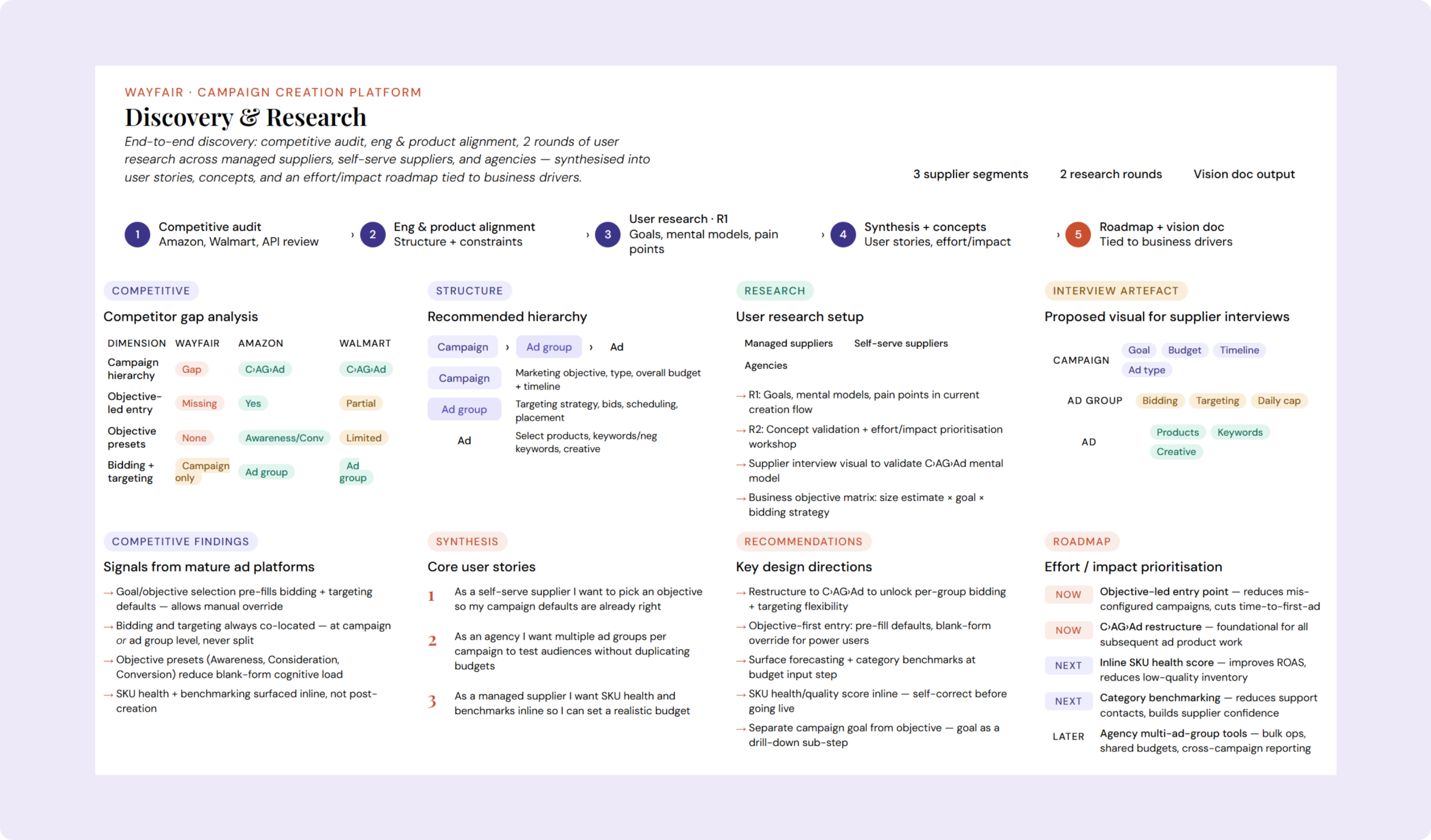
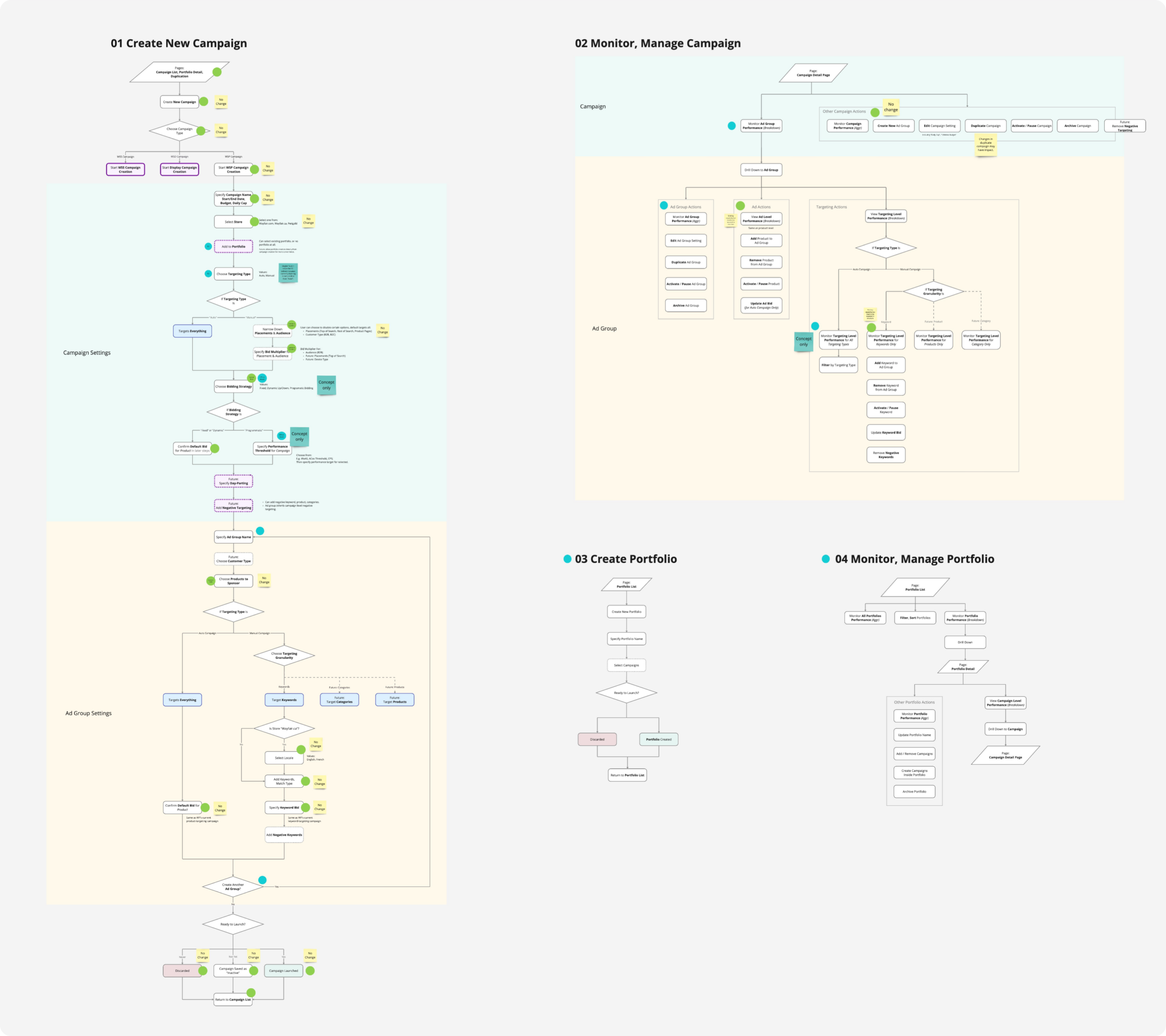
I ran discovery for Wayfair's campaign creation redesign — research, competitive analysis, and architecture alignment across two rounds and 16 suppliers. The work challenged a core product assumption: goals and campaign structure didn't need to be one solution. That reframe shaped the data model during a live tech transformation and surfaced the platform's most critical gap — the missing explore-and-exploit loop that limits supplier spend efficiency. Findings moved the roadmap from feature delivery to capability sequencing.
Laying the Groundwork
With the vision established, the first move wasn't to build everything — it was to improve what existed while engineering rebuilt the underlying architecture.
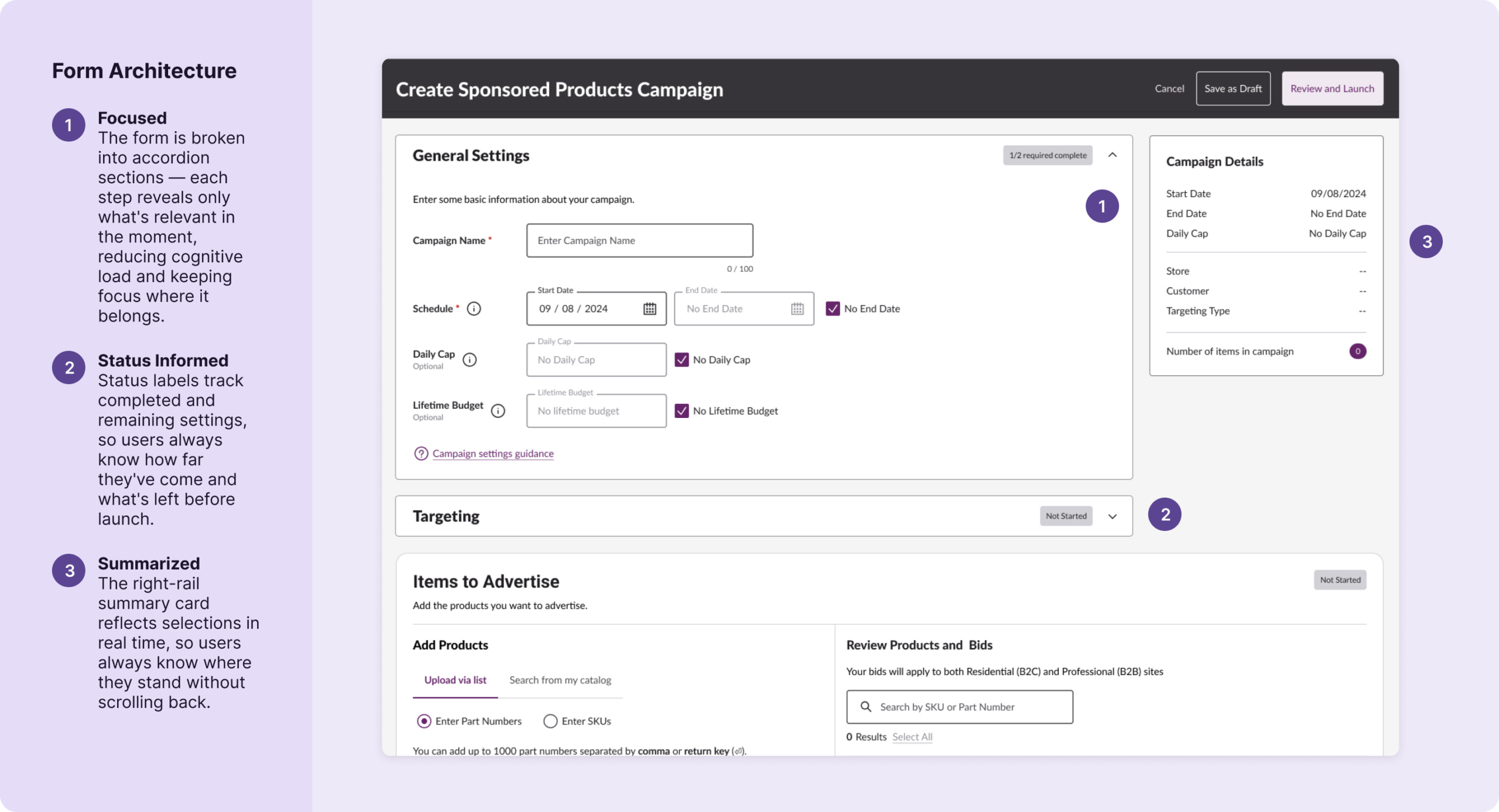
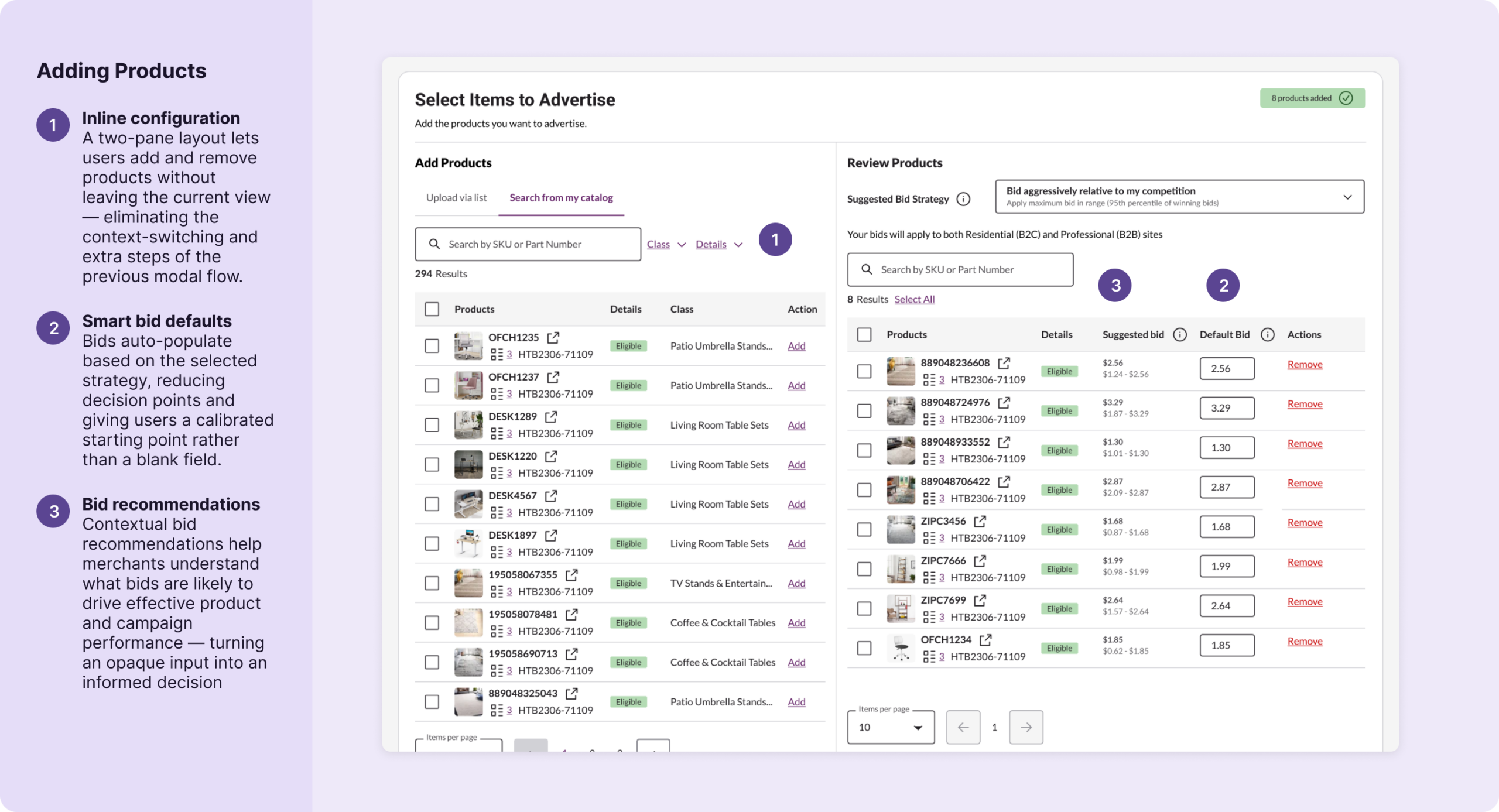
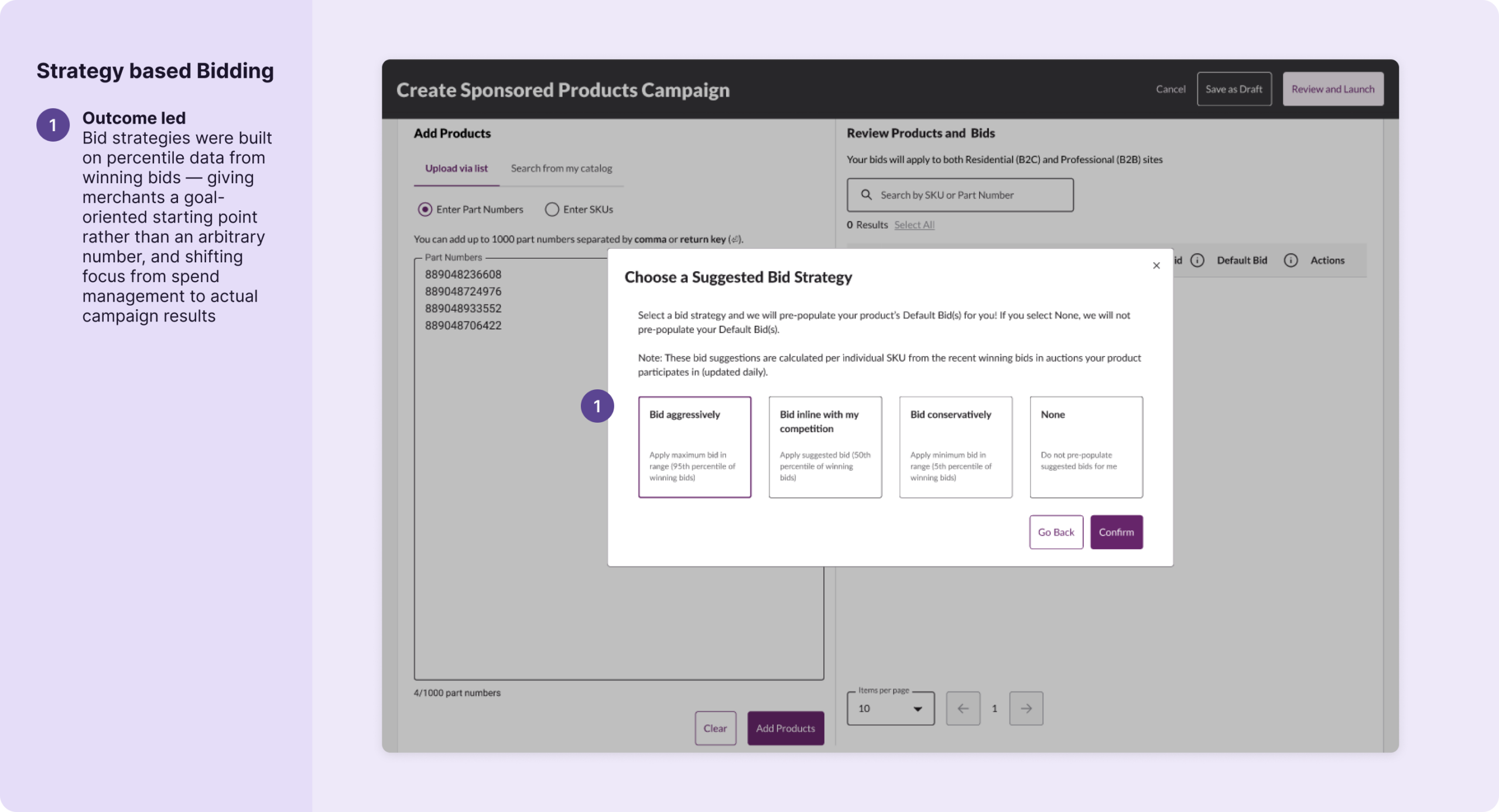
I used the design system migration as an opportunity to go beyond a like-for-like update. The focus was on the highest-friction moments in the existing flow: product selection — the most time-consuming step for suppliers — was redesigned for speed and clarity; add and edit workflows were streamlined; targeting capabilities were surfaced more effectively; and bid recommendations were introduced for the first time.
Structural changes — accordions to reduce cognitive load, a persistent summary card to eliminate backtracking, contextual tooltips to reduce dependency on external support — weren't cosmetic. Each addressed a specific drop-off or hesitation point identified in discovery, and together moved suppliers through setup with measurably more confidence.
Designing the the Future-State Vision
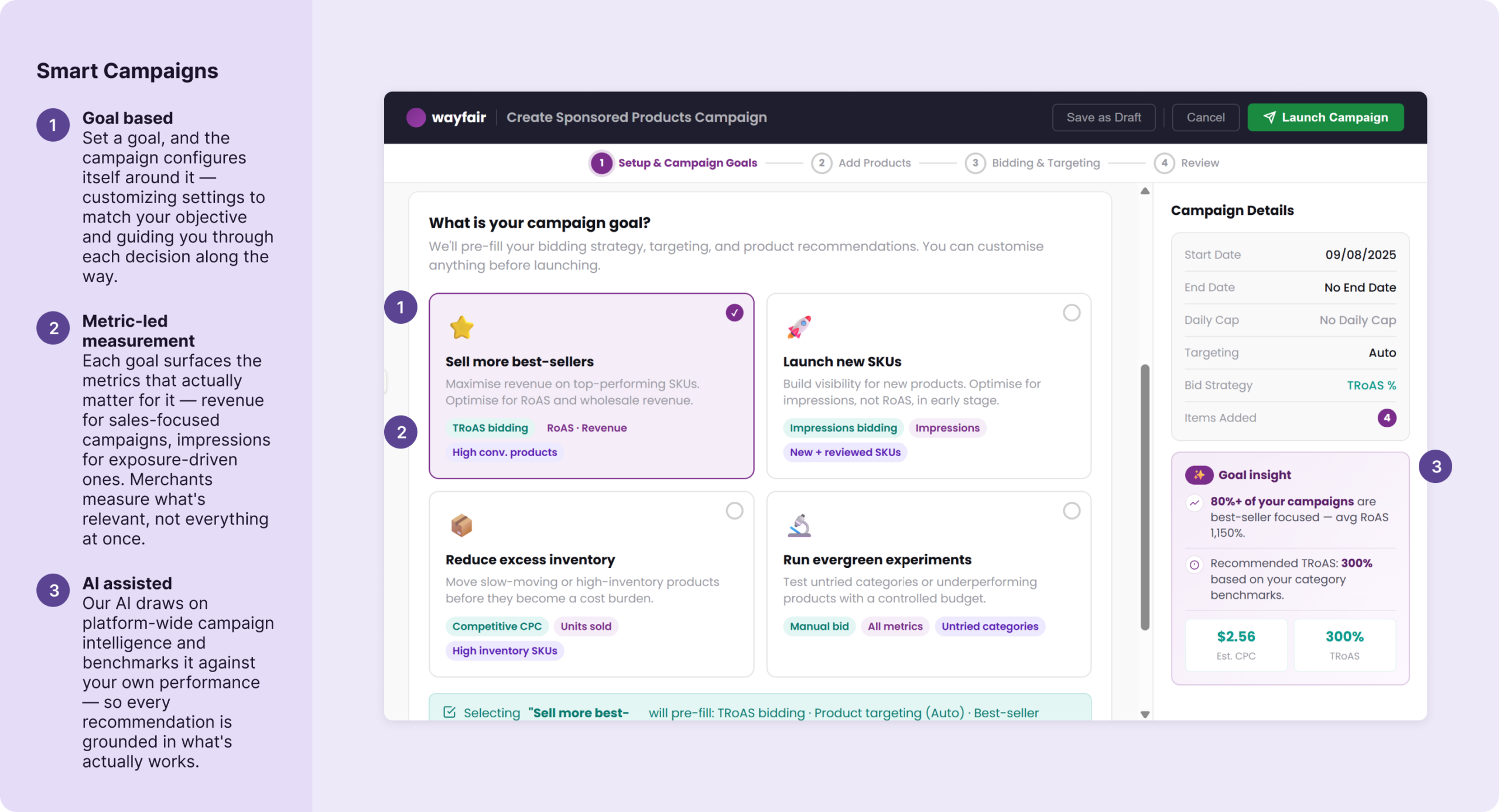
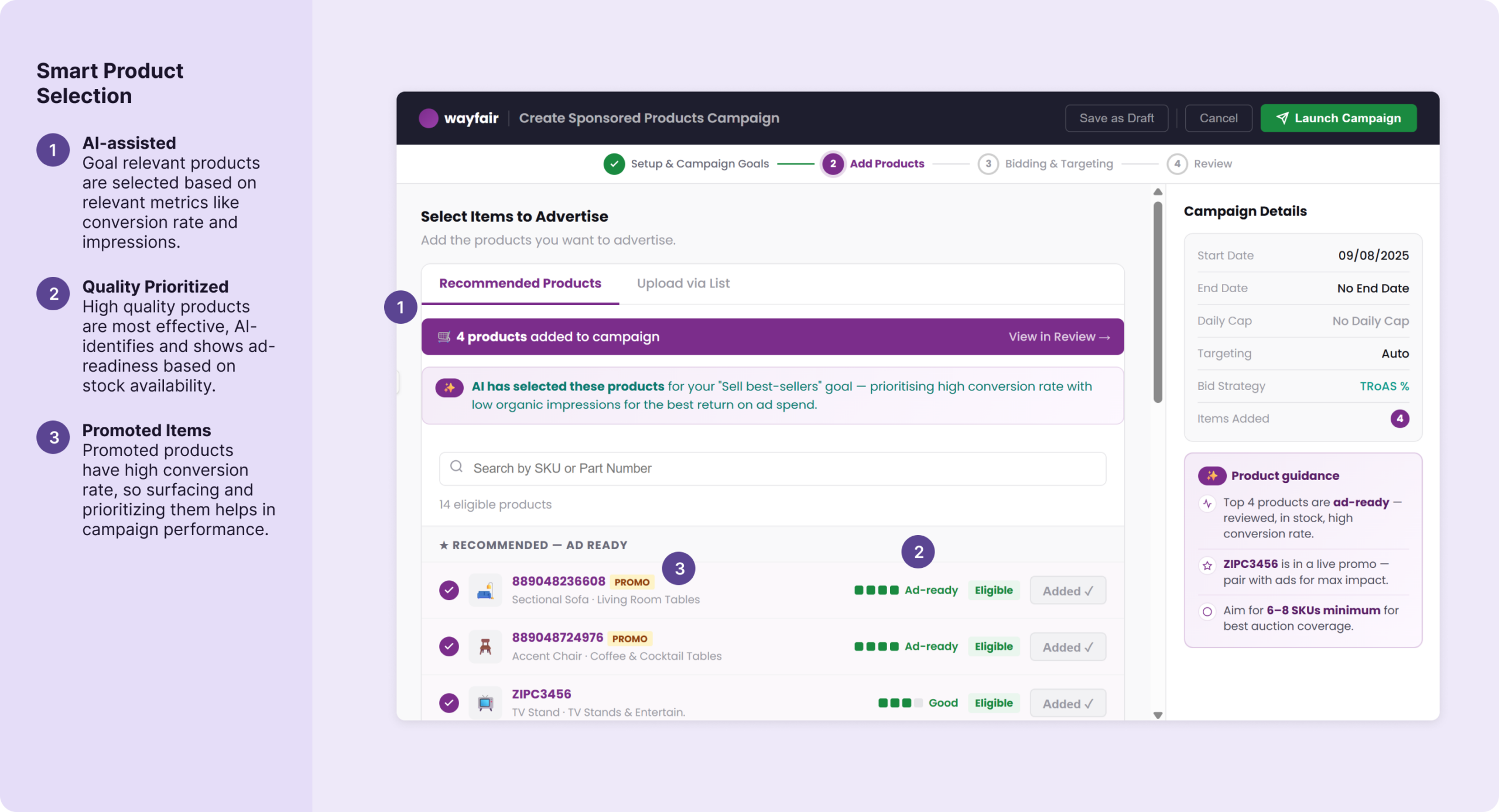
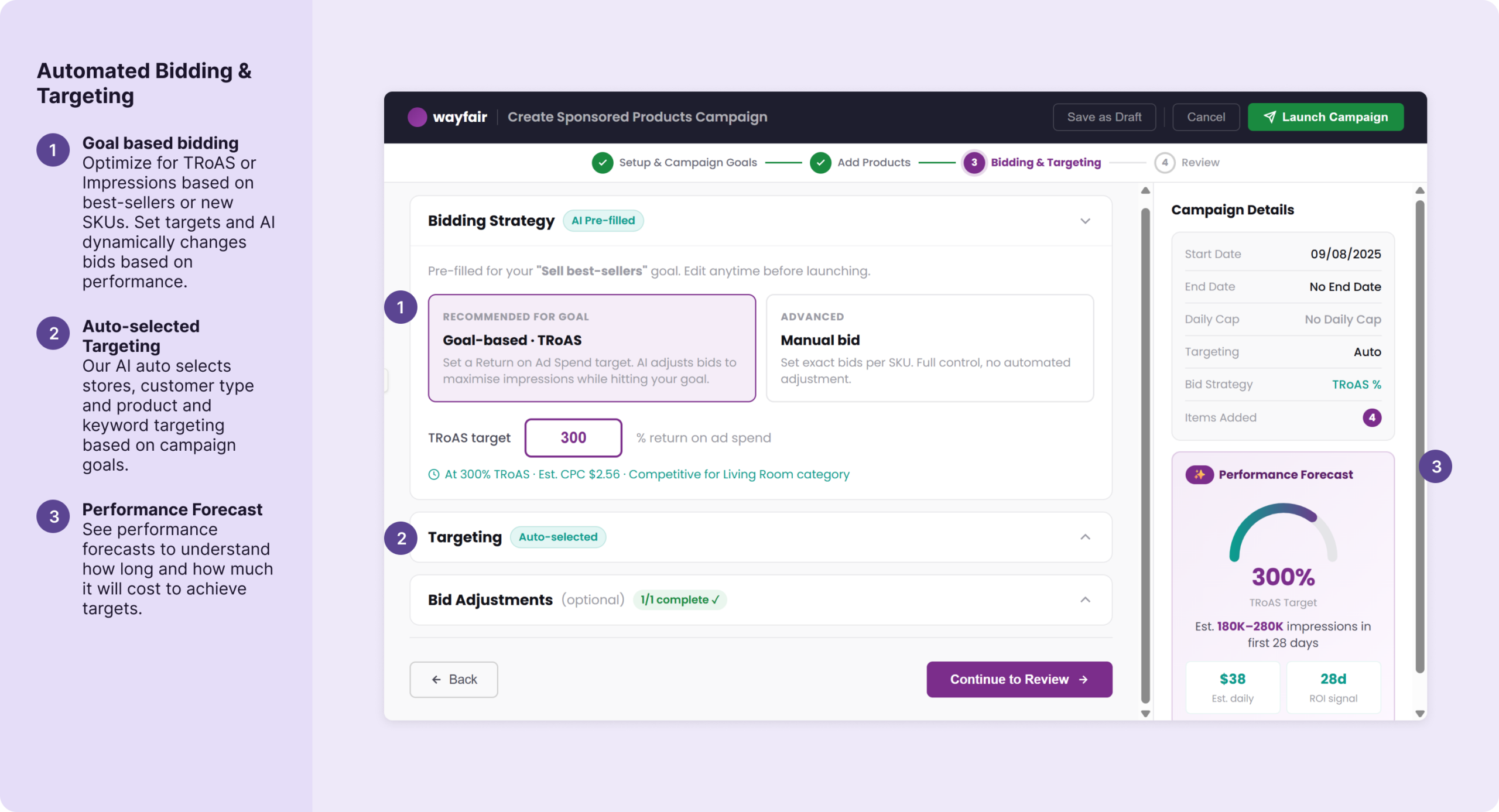
While the MVP was in development, I designed the future-state — what the platform needed to become for Wayfair to compete seriously in supplier advertising.
The vision centered on intelligence at every decision point: product recommendations tailored to supplier type and business goal, bid guidance grounded in real winning-bid data, and targeting recommendations that reduced the expertise gap for less sophisticated advertisers — while giving advanced suppliers and agencies the granular controls they actually needed.
Structurally, this meant designing for a more capable campaign hierarchy: ad groups to enable granular targeting and bidding, portfolios to aggregate and monitor performance across related campaigns, and programmatic bidding to shift suppliers from manual guesswork toward outcome-oriented spend. Together, these weren't incremental additions — they were the architectural pieces that would allow supplier advertising on Wayfair to scale from a simple setup tool into a platform that actively drives ad investment and business growth.
What I'd Carry Forward
Discovery is only as useful as the assumptions it's willing to kill. The most consequential output here wasn't a research report — it was a single reframe that separated two problems that had been treated as one.
Working inside a tech transformation taught me that timing is a design decision. The data model could be shaped before it hardened — but only if design had a point of view on architecture, not just interface.
And vision without a capability sequence is just optimism. The future-state had traction because the argument was already made in discovery.
Selected Works
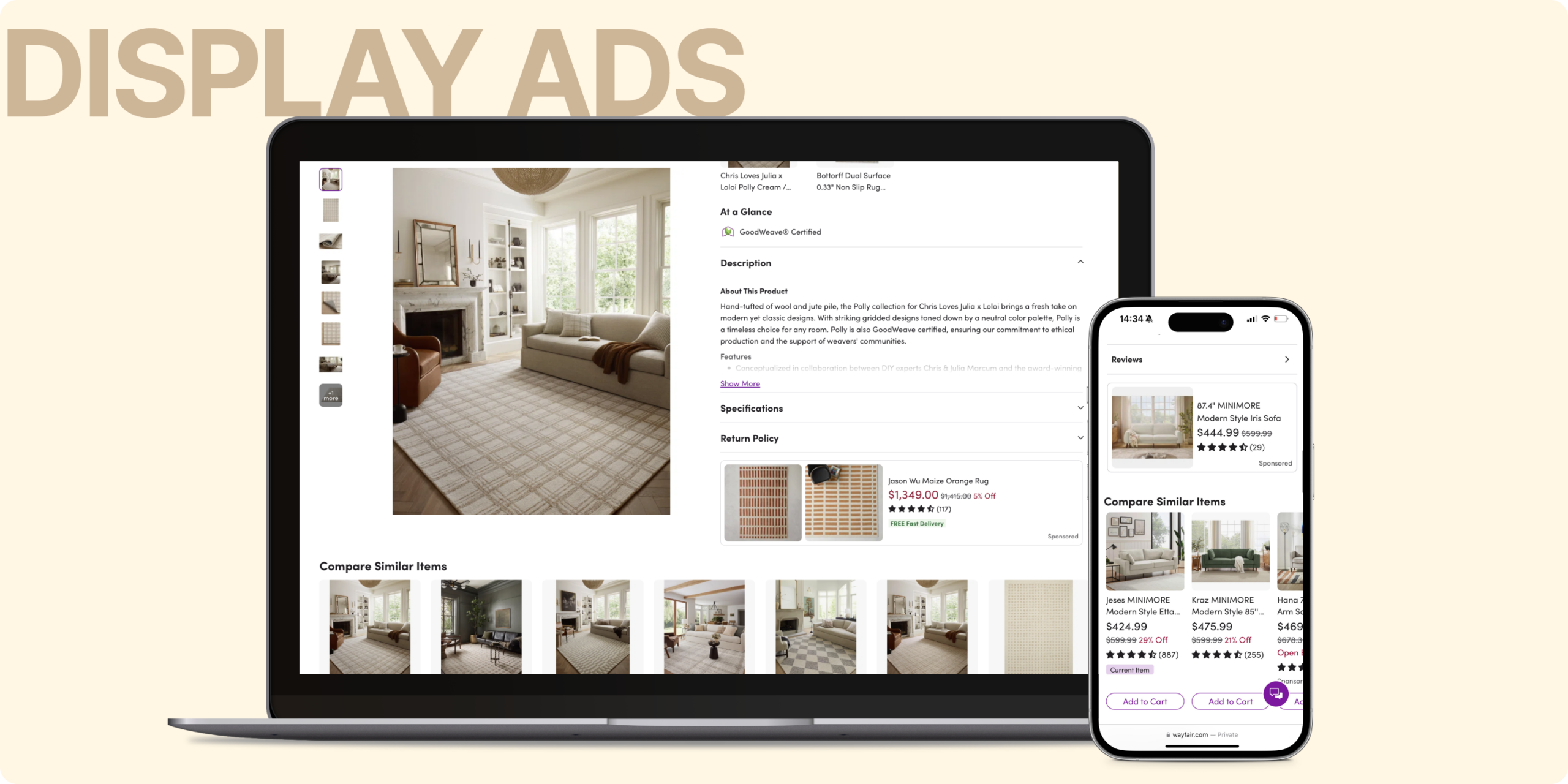
Wayfair - Display Ads2024 . Mobile & Web . Vision & Strategy
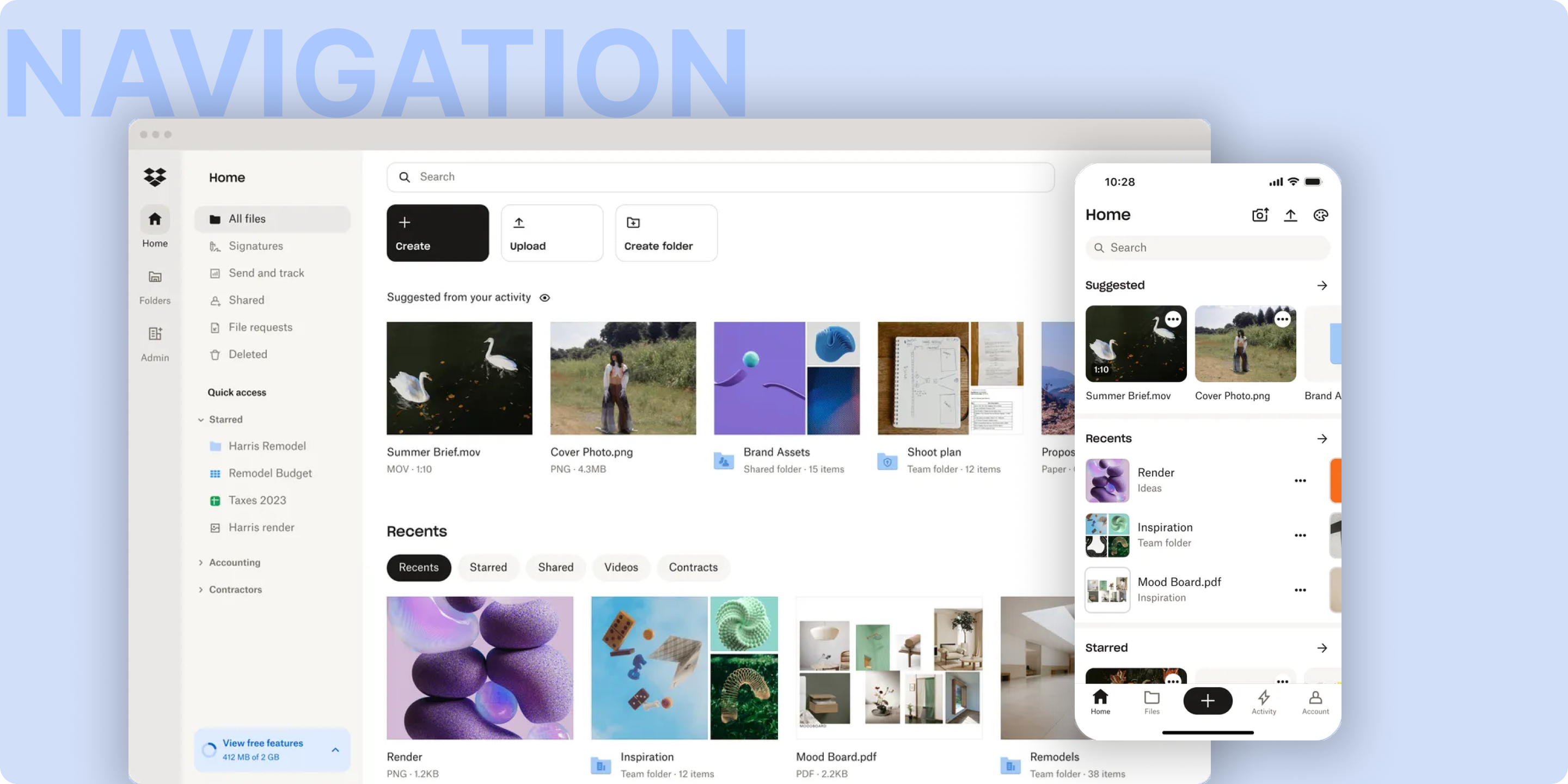
Dropbox - Browse and Navigate2024 . Mobile & Web . Vision & Strategy
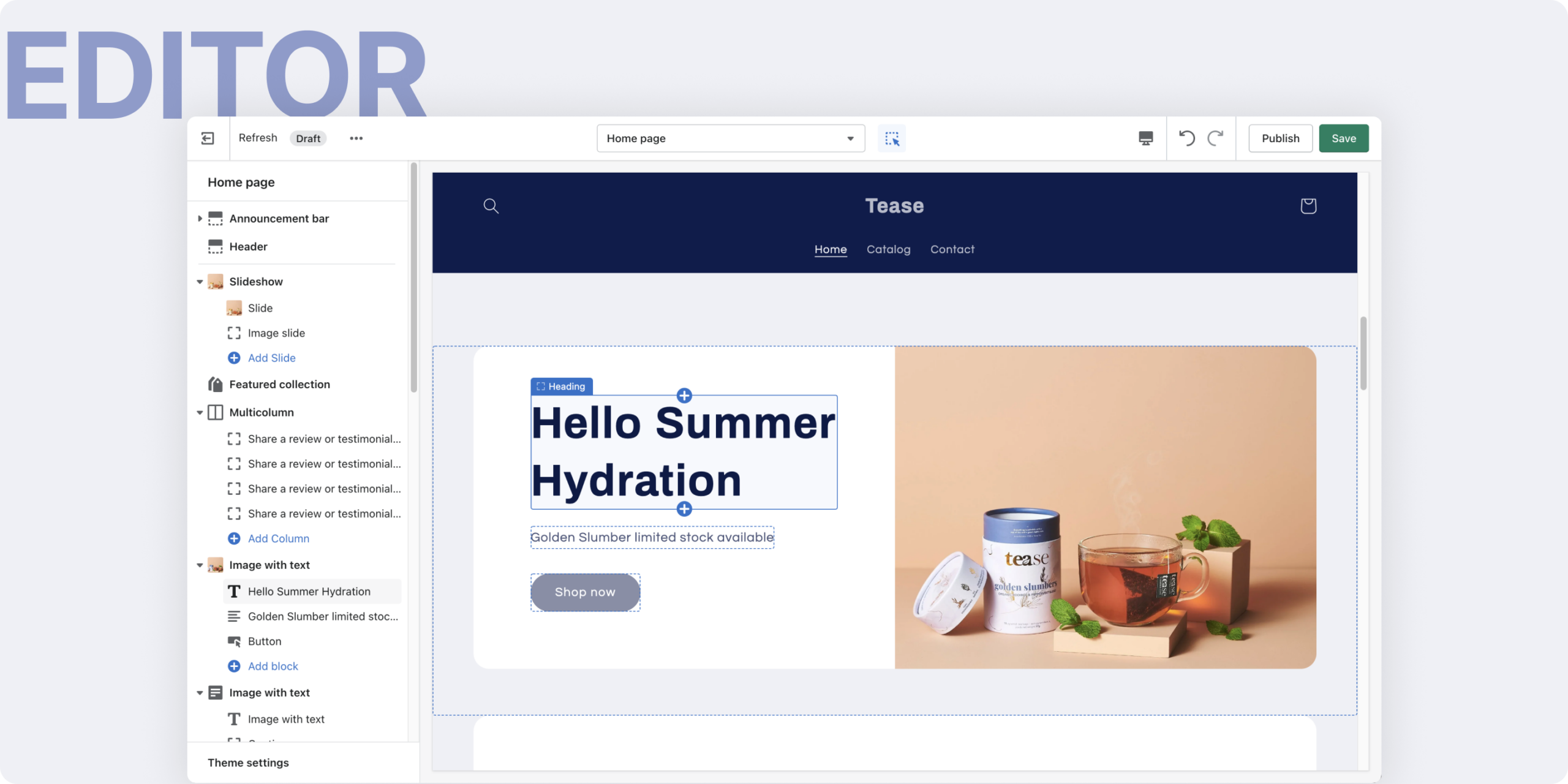
Shopify Editor2022 . Web . Interaction Design
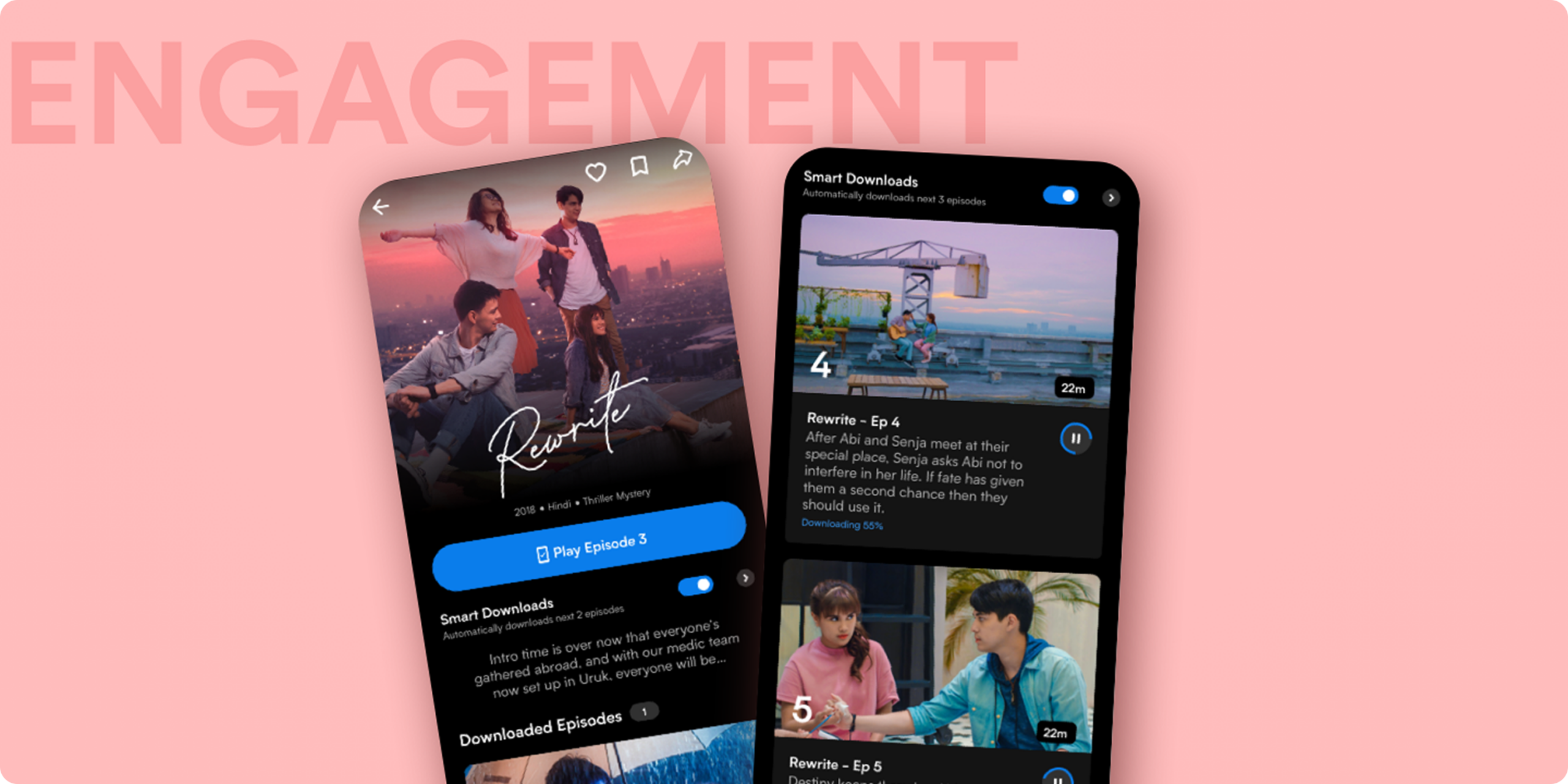
Viu Engagement2018-2019 . Mobile Design . Vision & Strategy
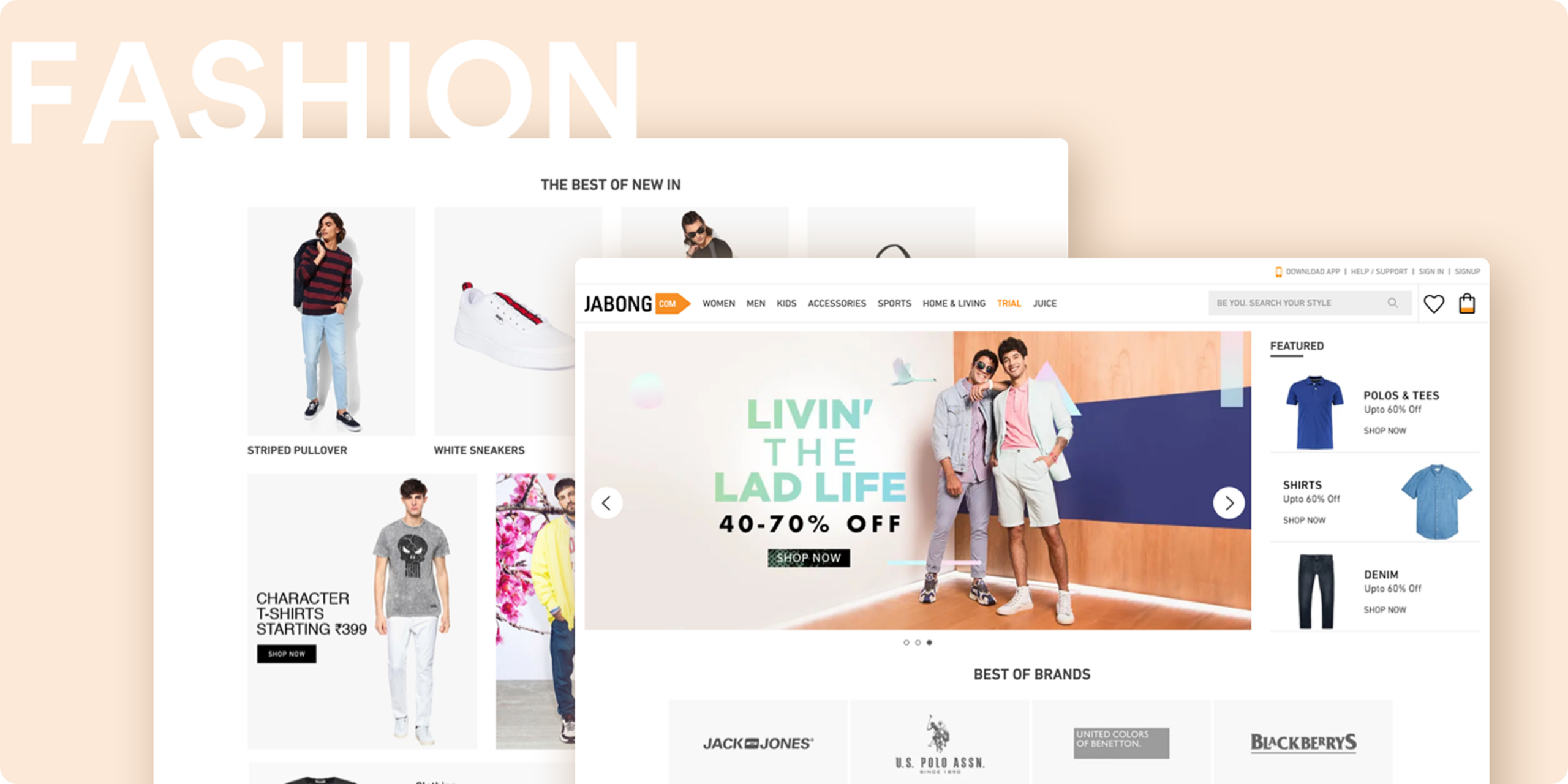
Jabong Fashion2014 . Web & Mobile . Vision & Strategy
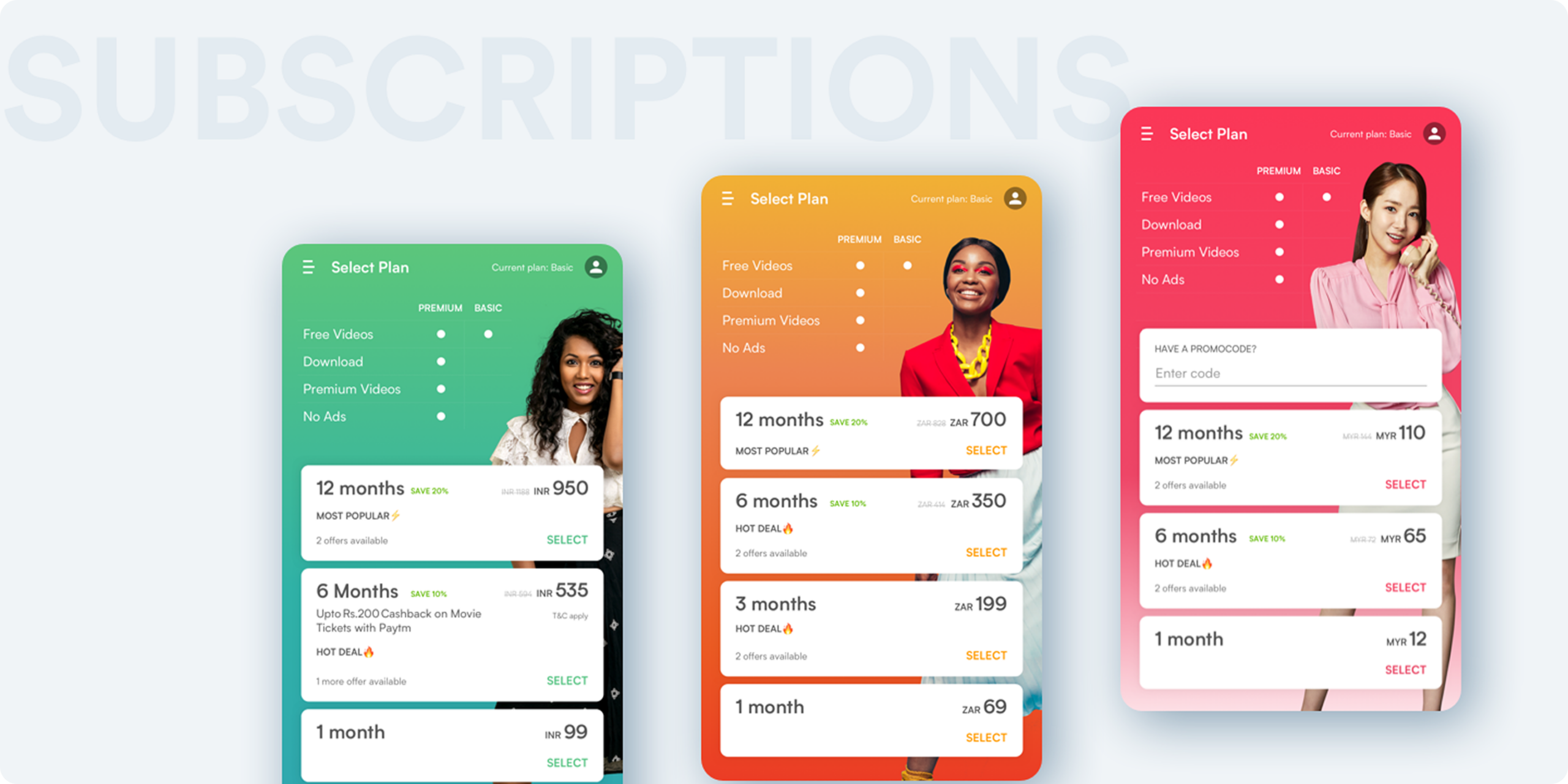
Viu Subscriptions2018 . Mobile Design . Design systems