
Reimagined Jabong.com, India’s leading fashion commerce platform by creating an immersive apparel focused shopping experience and designing a category-first, responsive ecosystem across mobile, tablet, and web.
OPPORTUNITY
Jabong carried fashion inventory but presented it like a utility catalogue — the UI prioritised product listings over editorial experience, leaving users with no sense of brand or aspiration and no reason to browse beyond a specific purchase intent.
WHAT I DID
I contributed to reimagining Jabong from a generic e-commerce catalogue into a curated, fashion-led brand — designing across UX, UI, and responsive patterns as part of a small team that took the work from concept through stakeholder alignment to shipping India's first responsive fashion experience.
ESTIMATED IMPACT
• NPS score improved from 50 to 70
• New web experience rolled out to 100% users within 3 months of launch
PROBLEM STATEMENT
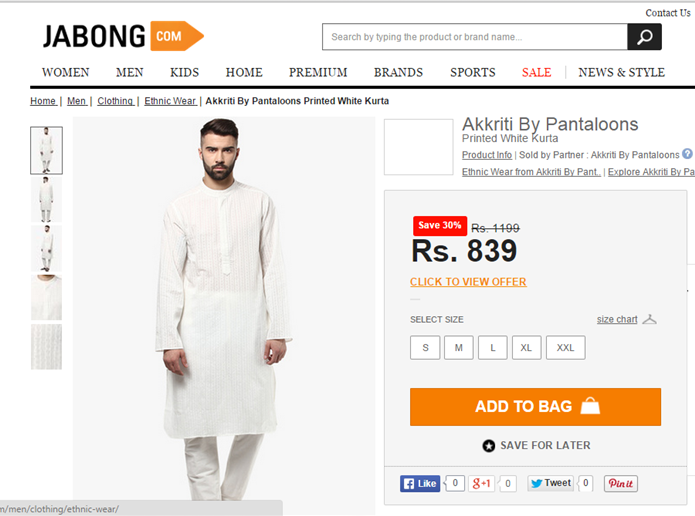
How might we create an apparel focused shopping experience so that users can purchase just like they would do in a retail store. Also, solve for scalability and flexibility for ease of maintenance & uniformity of experience on different platforms.
Our Target Segments
1. First time online shoppers: 21–25 years
2. Teenagers and adolescent: 16–25 years
3. Working professionals: 24–35 years
4. Nuclear families in metros and tier 1 cities
CUSTOMER INSIGHTS
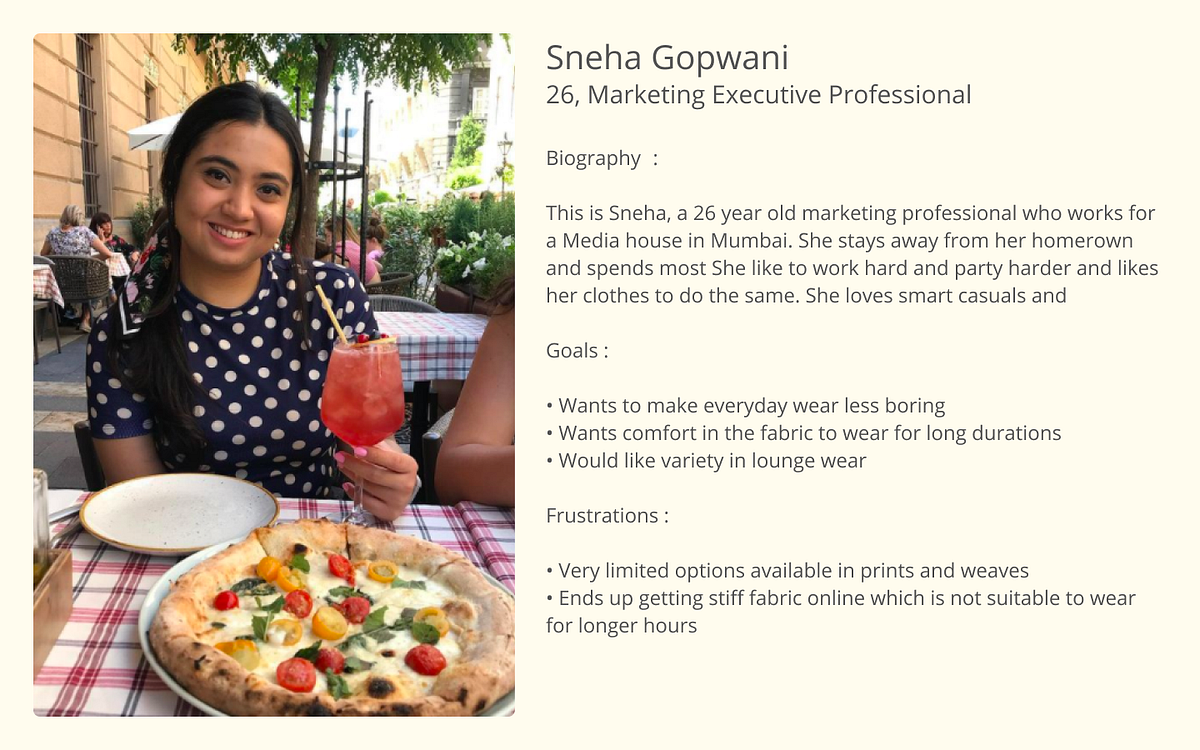
1. An online fashion buyer looks for exclusivity, something which is not available in the store next door. What gets them going is a slightly trendy and distinct product.
2. Users get inspired from digital marketing ads on social media posts and end up making impulsive purchases.
3. Easy discovery of products and ability to explore through catalogues are imperative for user purchase. The assortment is your merchandising. What you show is what you sell.
4. People buy for occasions. They always have in mind where they will wear/carry a piece of fashion, when they evaluate a fashion product.
5. People get overwhelmed by pure fashion content. Keep it simple, eg “look cool stay cool”.
INFORMATION ARCHITECTURE
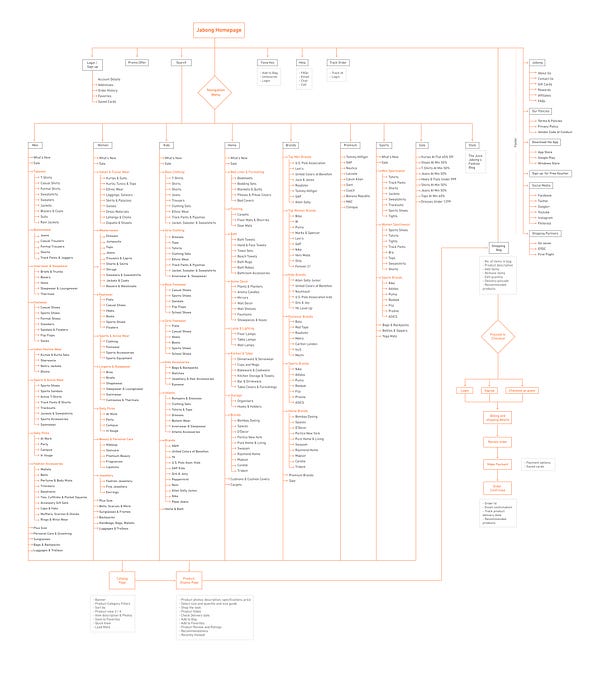
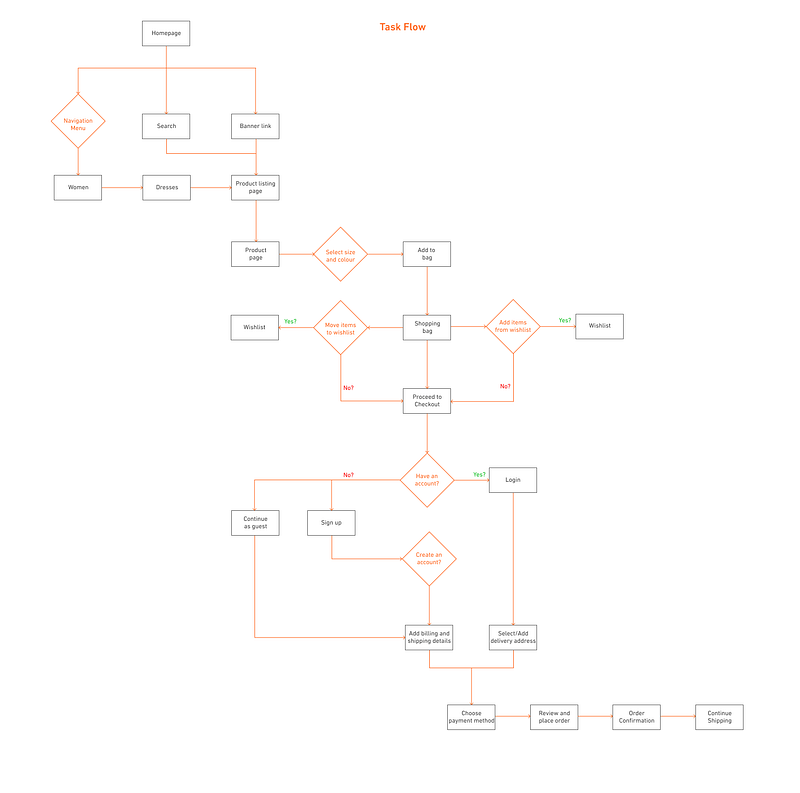
Before defining the site structure, we ran a card sorting study with 30 clothing items to understand how users naturally grouped and labelled categories — grounding the sitemap in mental models rather than internal taxonomy. From there, task flows mapped how a user would move through the site to complete a purchase, and user flow diagrams traced two distinct journeys: buying a product and using Jabong's Try & Buy feature.
BRAND BUILDING
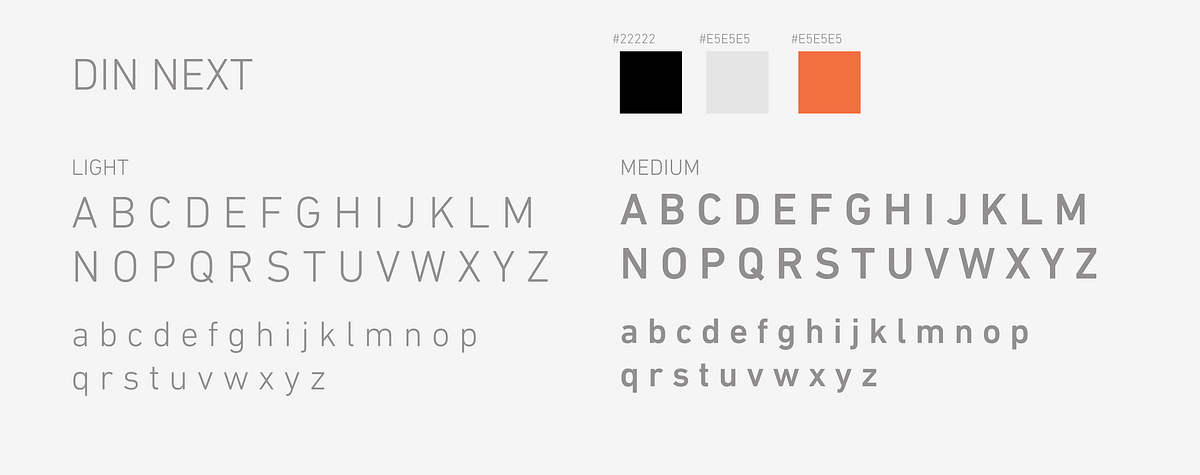
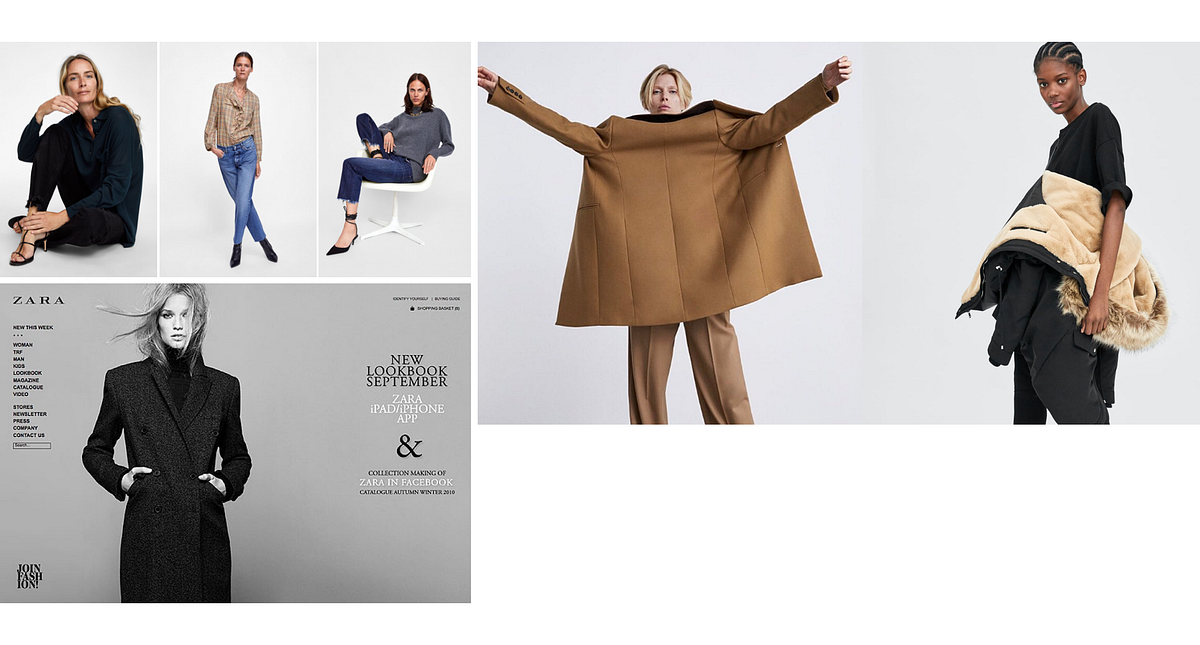
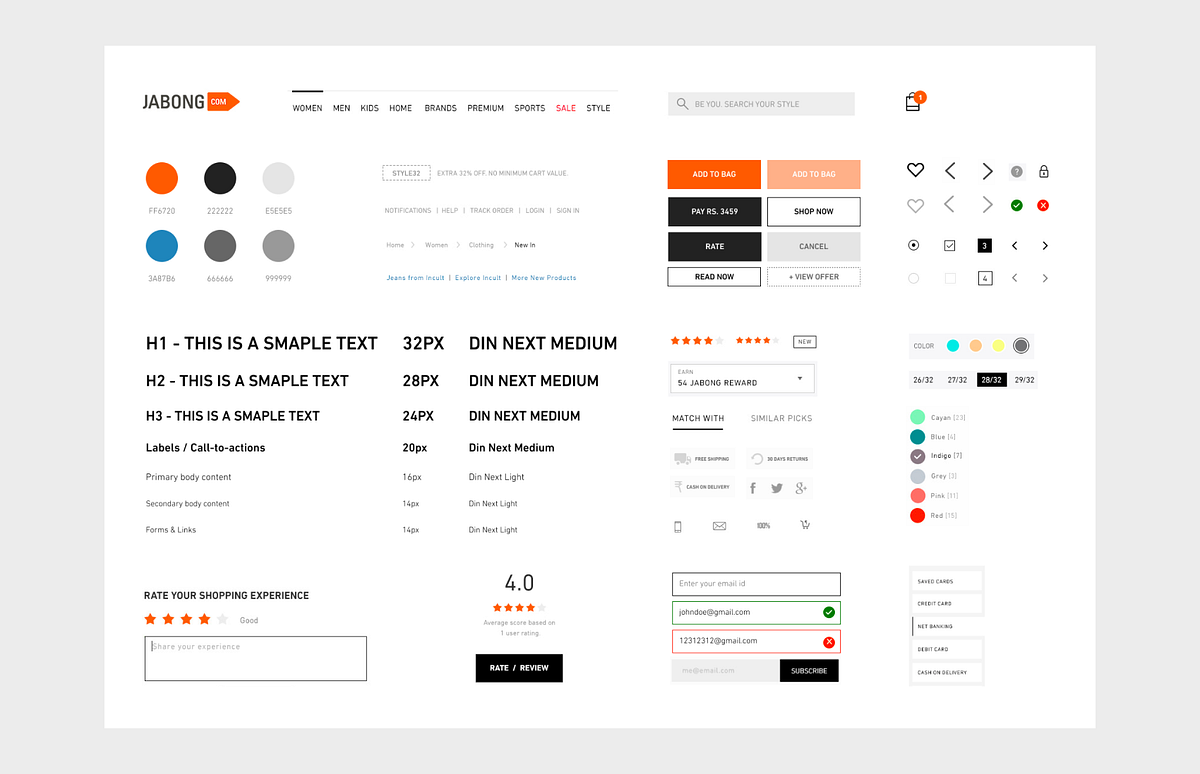
To shift Jabong's perception from catalogue to fashion destination, we revisited the foundational brand elements — selecting a typeface that carried editorial weight, refining the color palette to feel more curated and less utilitarian, and building a bespoke icon set that brought visual consistency to the experience. Small changes on paper, but collectively they shifted the tone of every surface the user touched.
RESPONSIVE DESIGNS
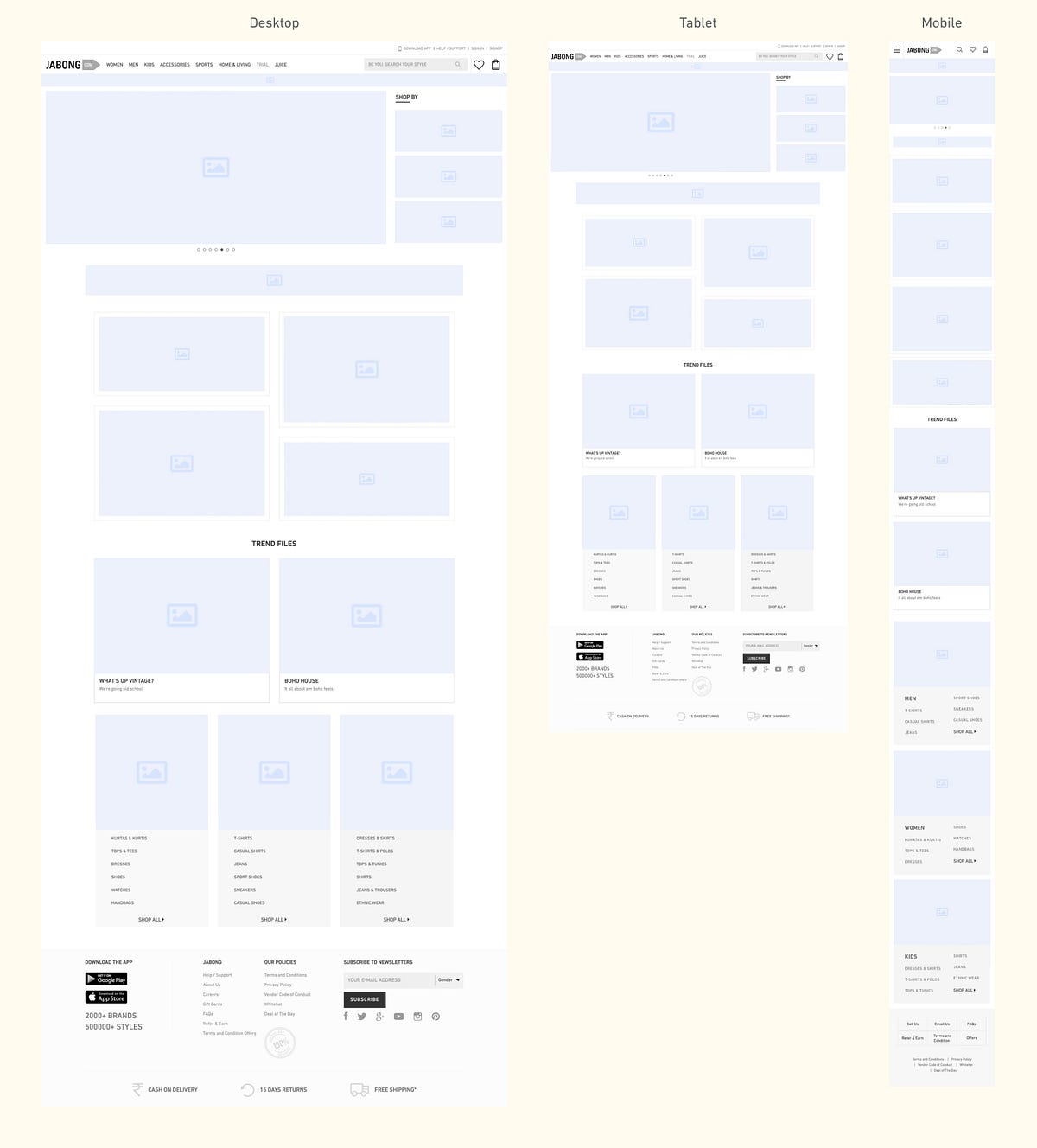
We did initial brainstormings and sketches to figure out how we wanted to improve upon some of the key user flows and also to understand how the responsive website would work. Adapting the Homepage and some other key screens helped in this exercise.
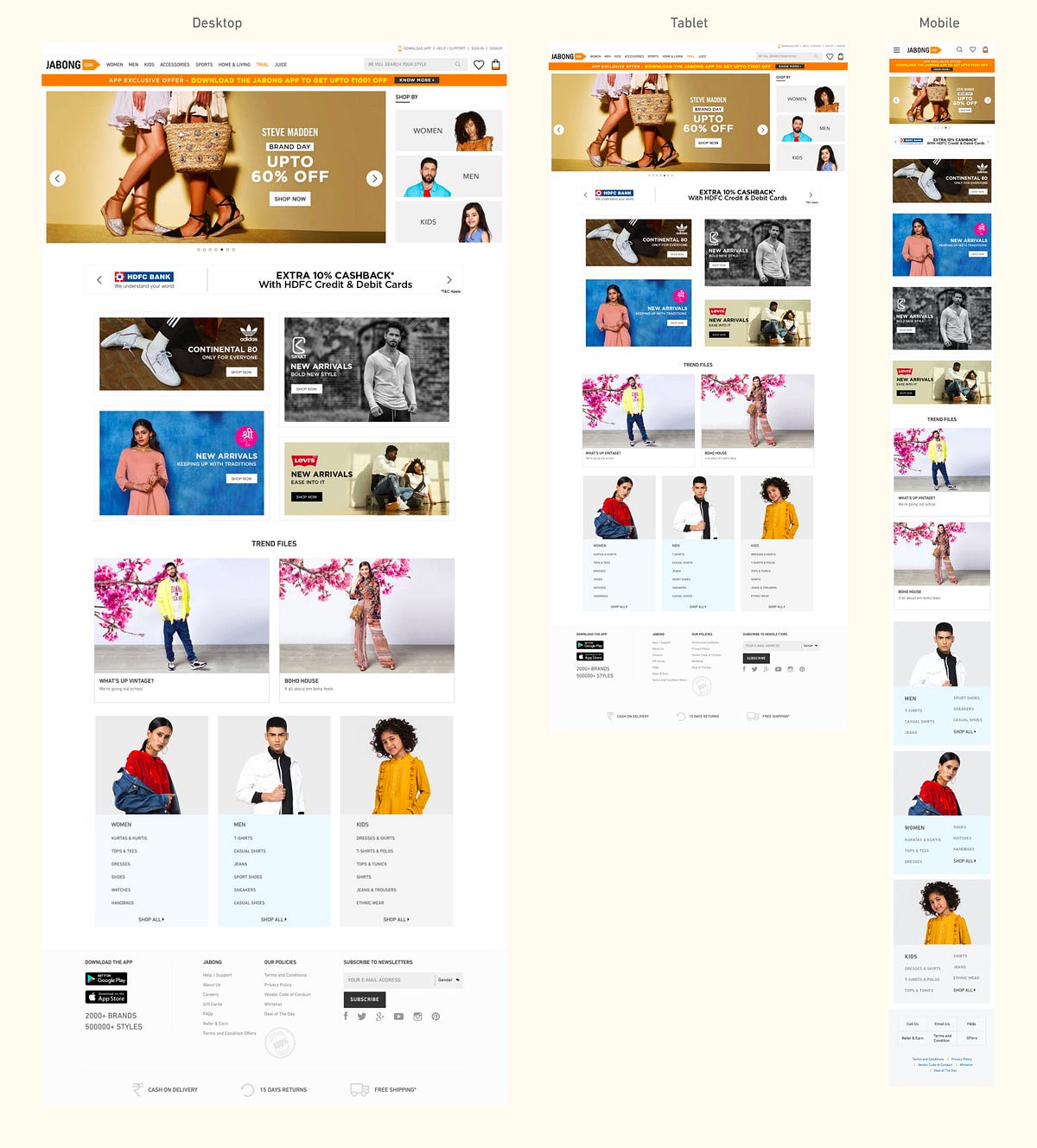
FINAL DESIGNS
The brand revamp of Jabong was implemented over a period of 6 months. Following the design language, a visual approach showcasing fashion sub-categories and products through appropriate widgets and groupings were developed.
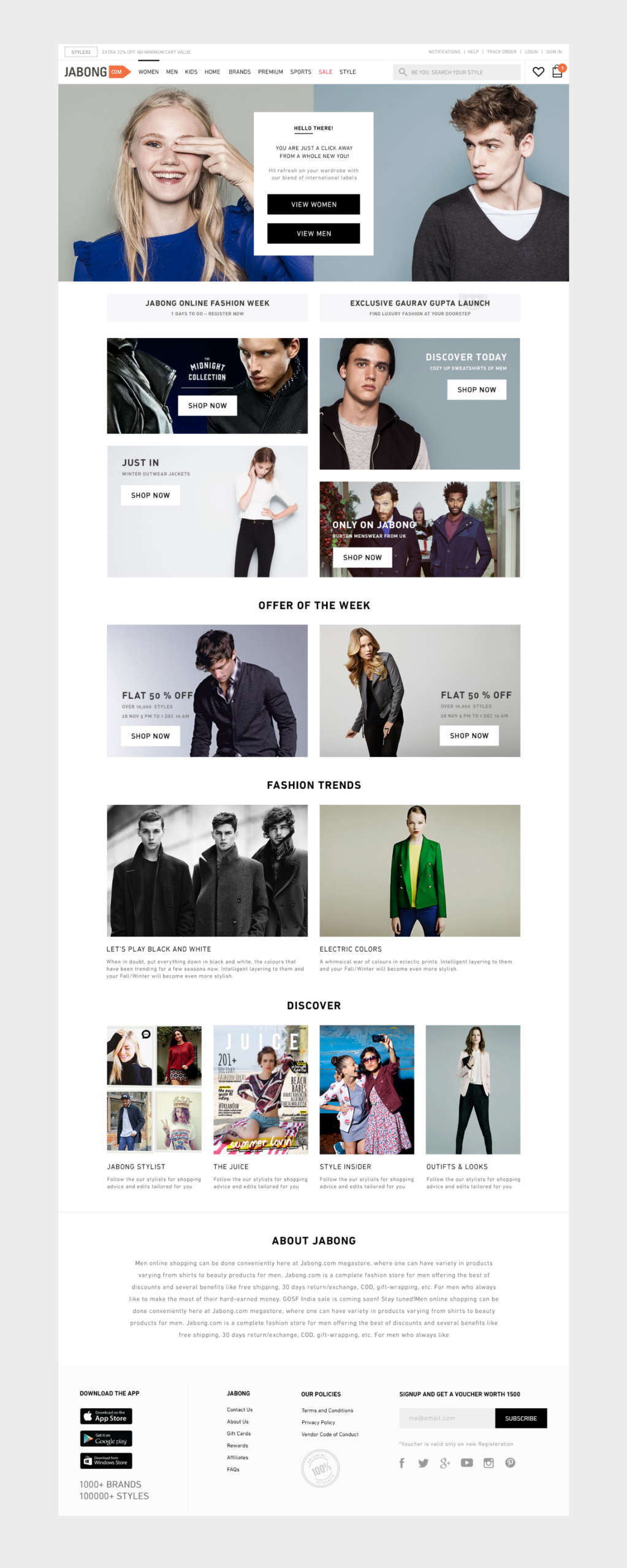
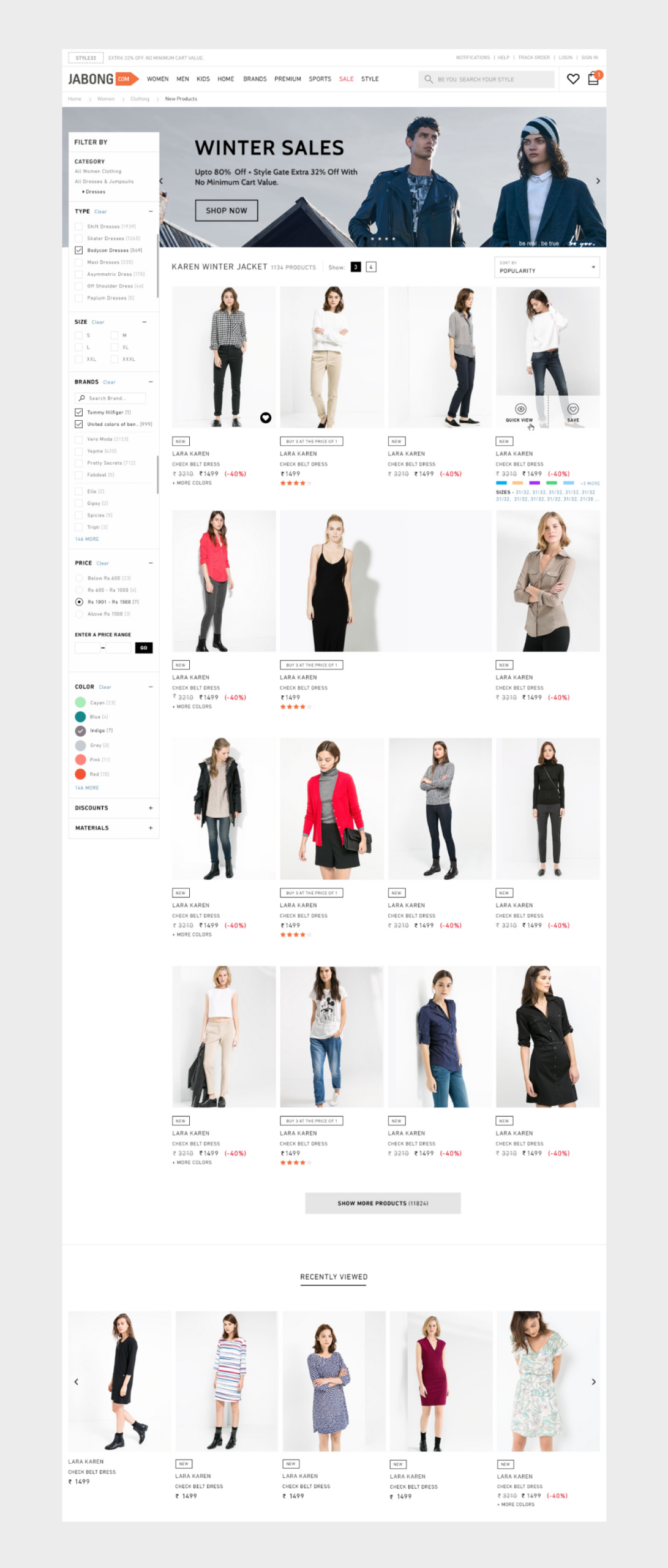
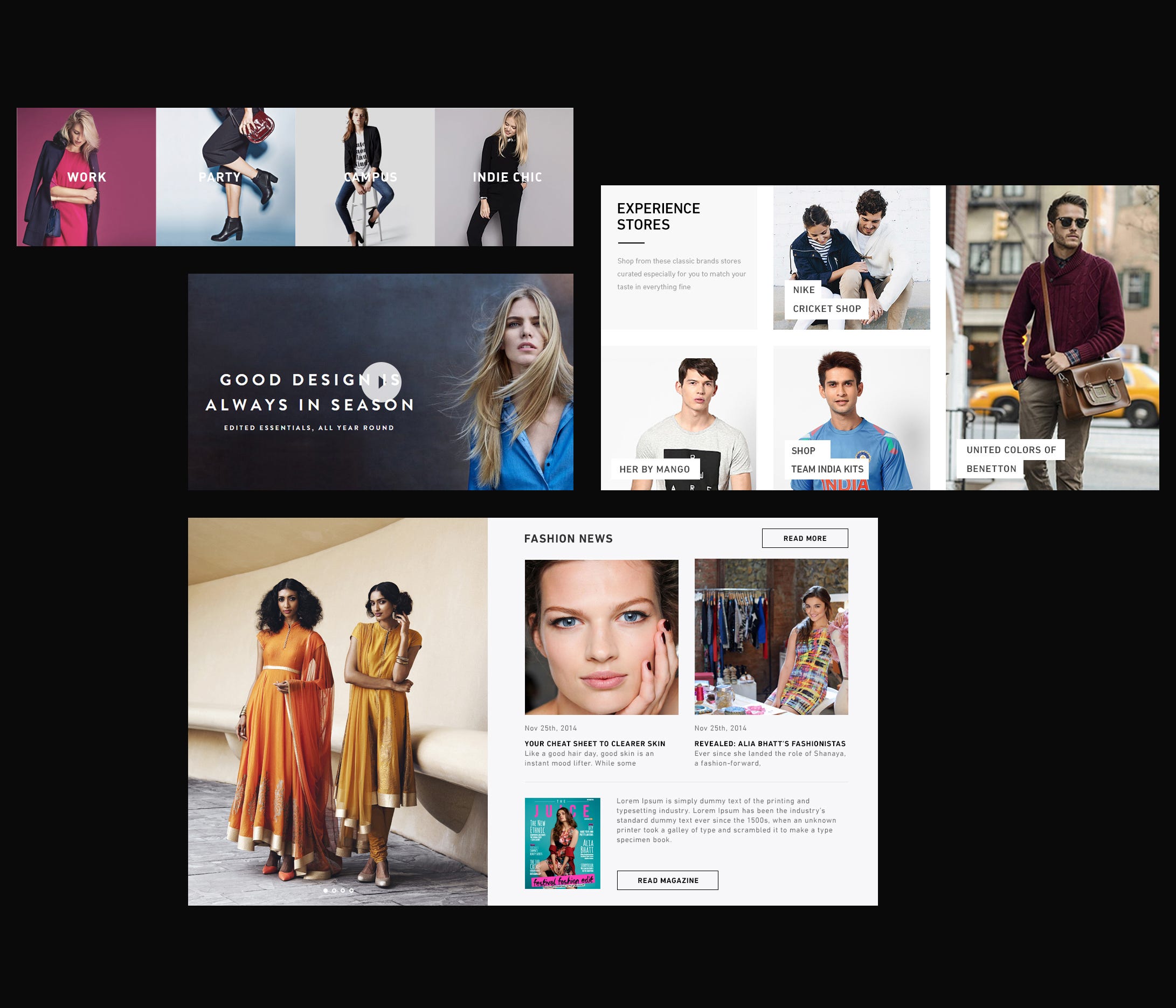
CATEGORY BASED MODULAR WIDGETS
The brand revamp of Jabong was done implemented over a period of 6 months. Following the design language, a visual approach showcasing fashion sub-categories and products through appropriate widgets and groupings were developed.
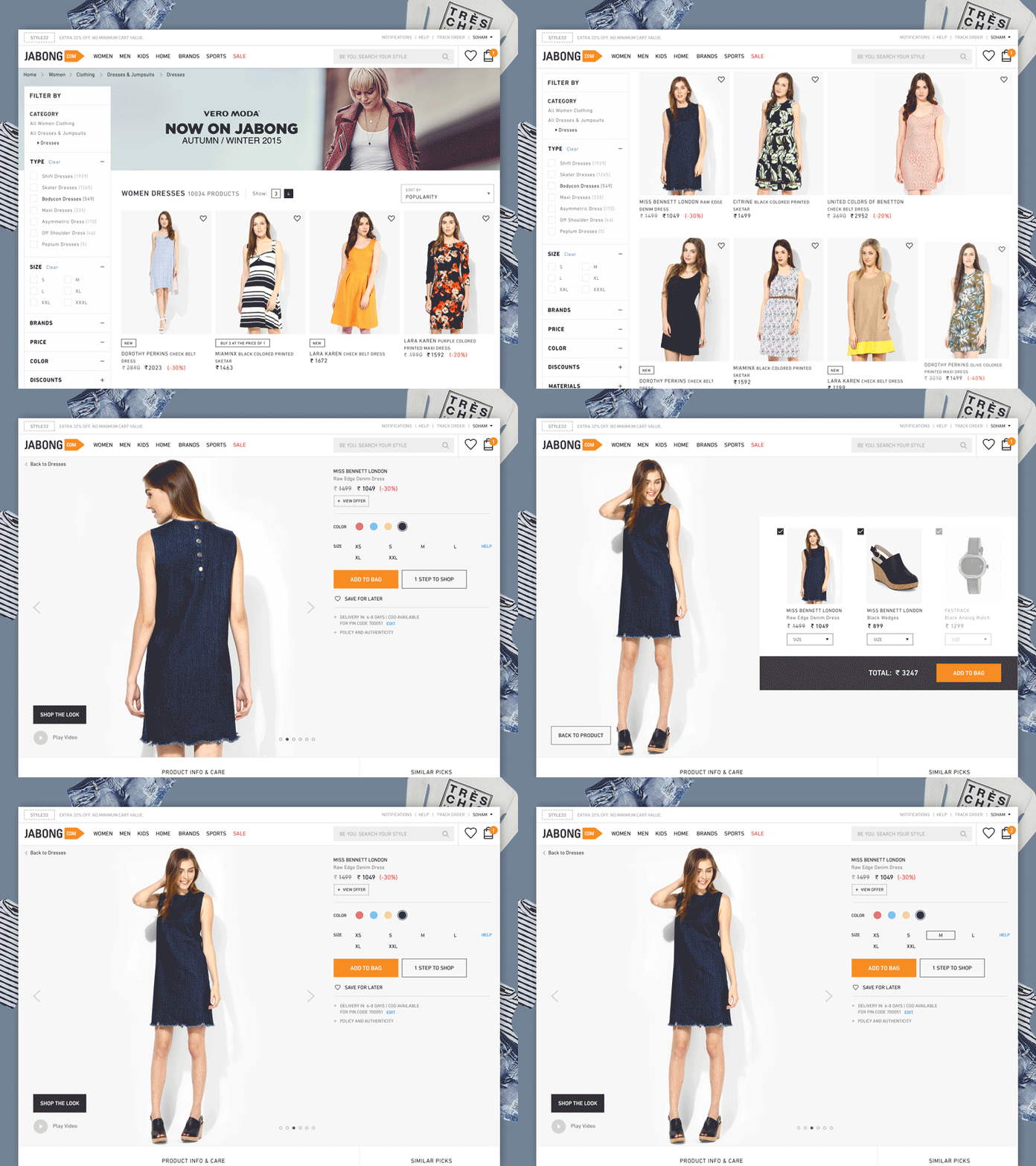
SHOP THE LOOK
Analytics and session recordings revealed users engaging with the lookbook but leaving frustrated — there was no way to shop a look or link through to a featured product. The feature was driving intent it couldn't convert. The solution reoriented the experience around the products themselves: letting users browse a look and shop it without ever losing their place.
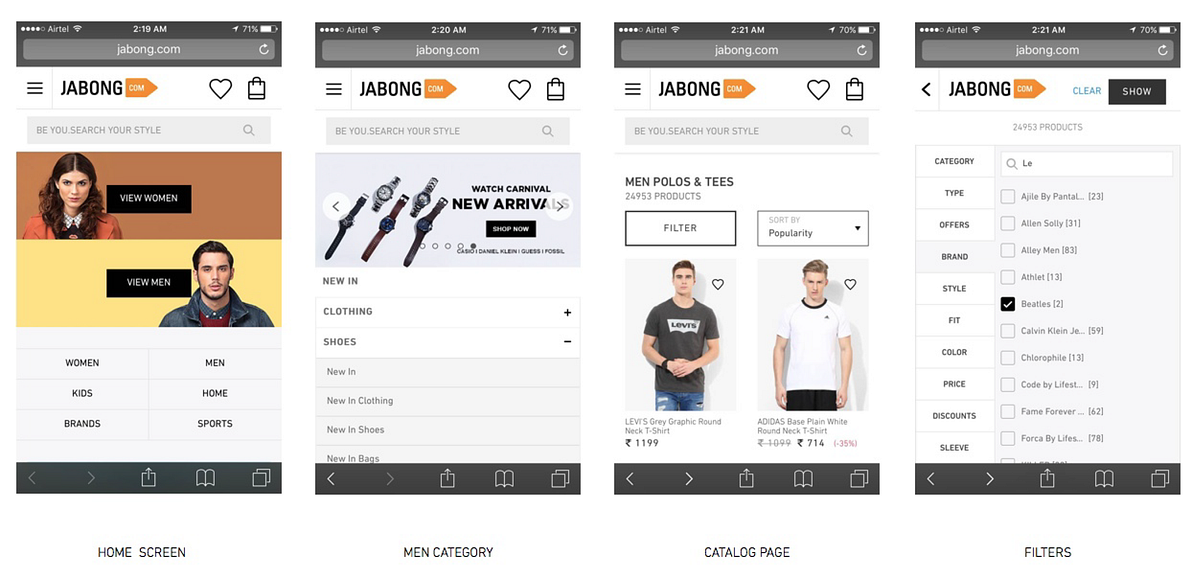
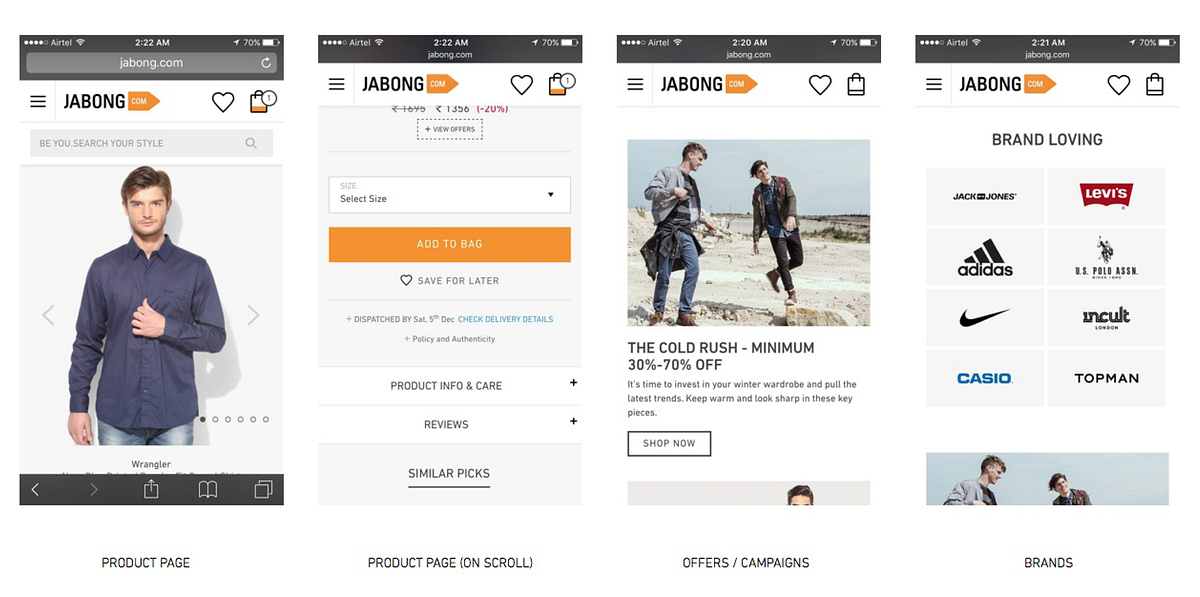
MOBILE
As a country growing its mobile dependency - designs were mobile first to focus on the emerging segment - soon to become a major contribution is browsing and consumption.
Selected Works
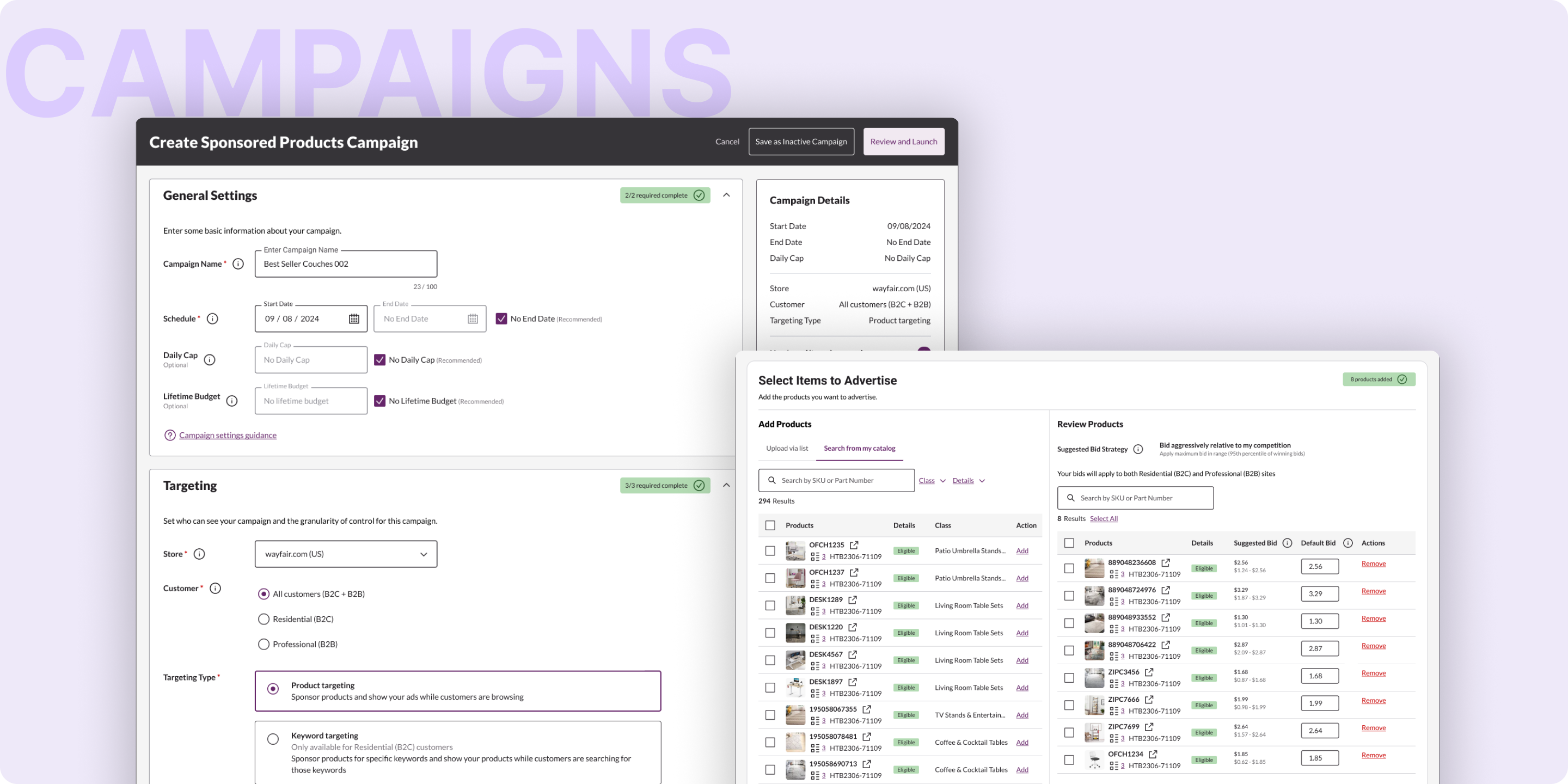
Wayfair - Unified Campaign Creation2024-2025 . Web . Vision & Strategy
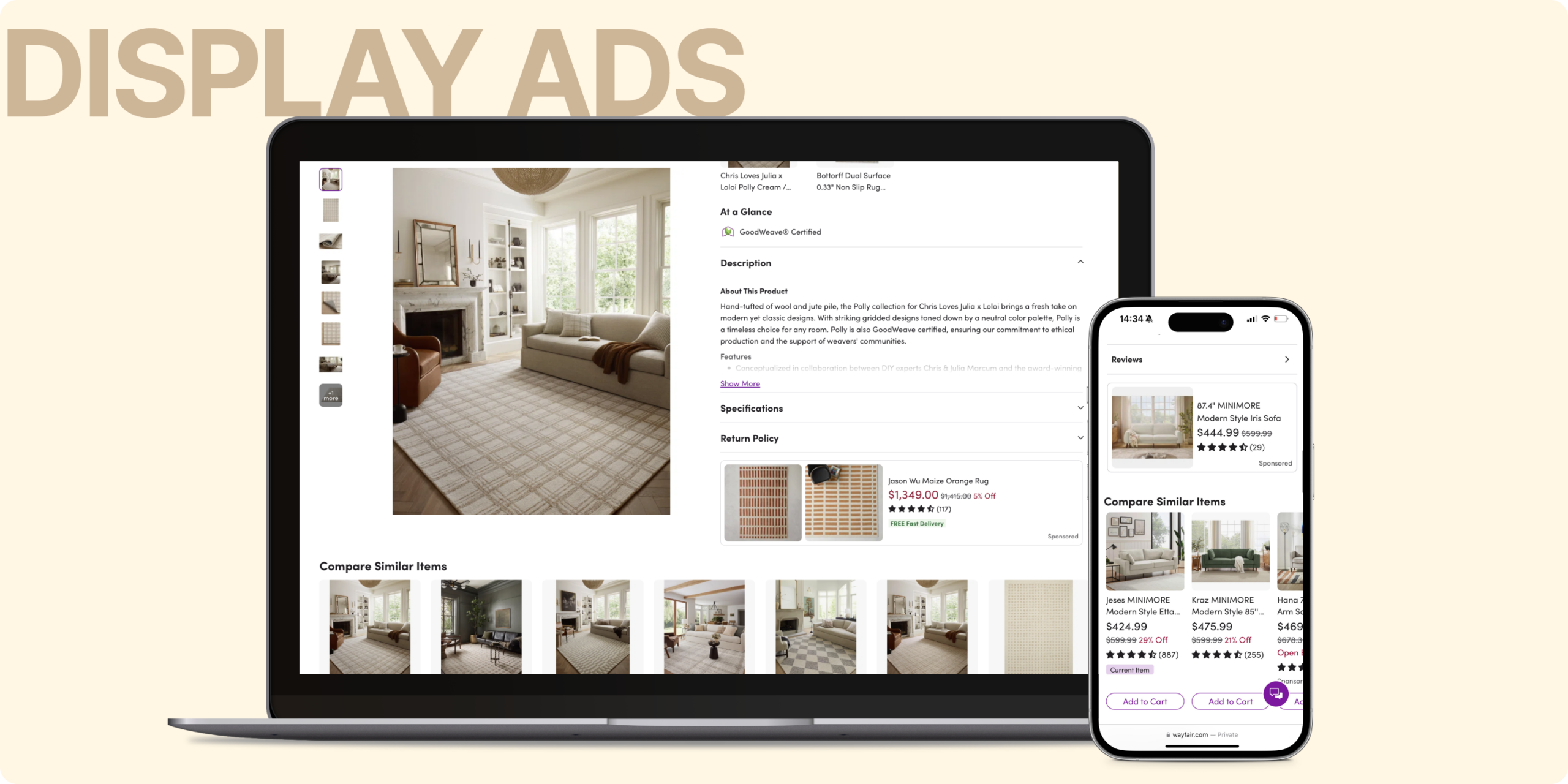
Wayfair - Display Ads2024 . Mobile & Web . Vision & Strategy
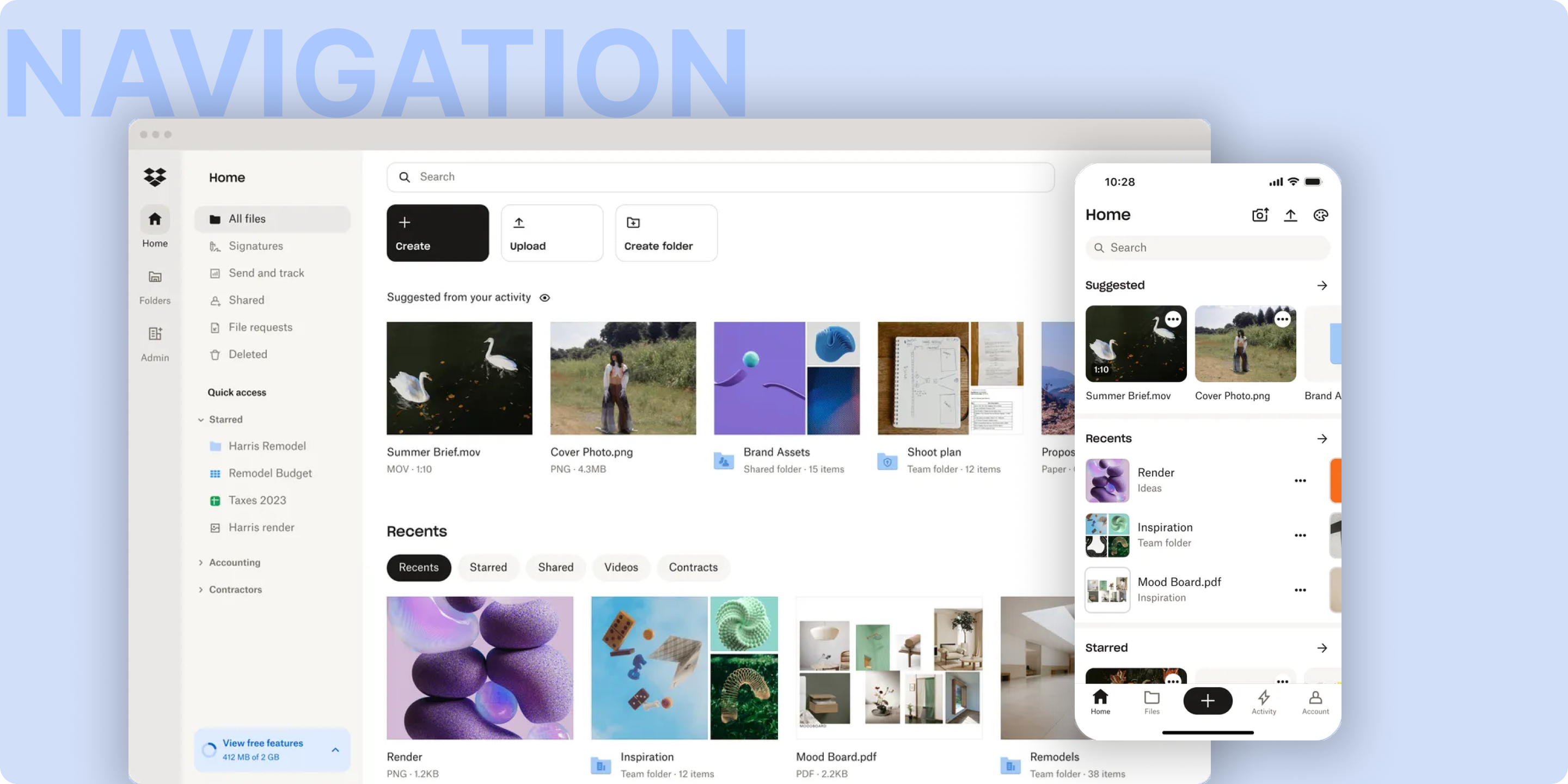
Dropbox - Browse and Navigate2024 . Mobile & Web . Vision & Strategy
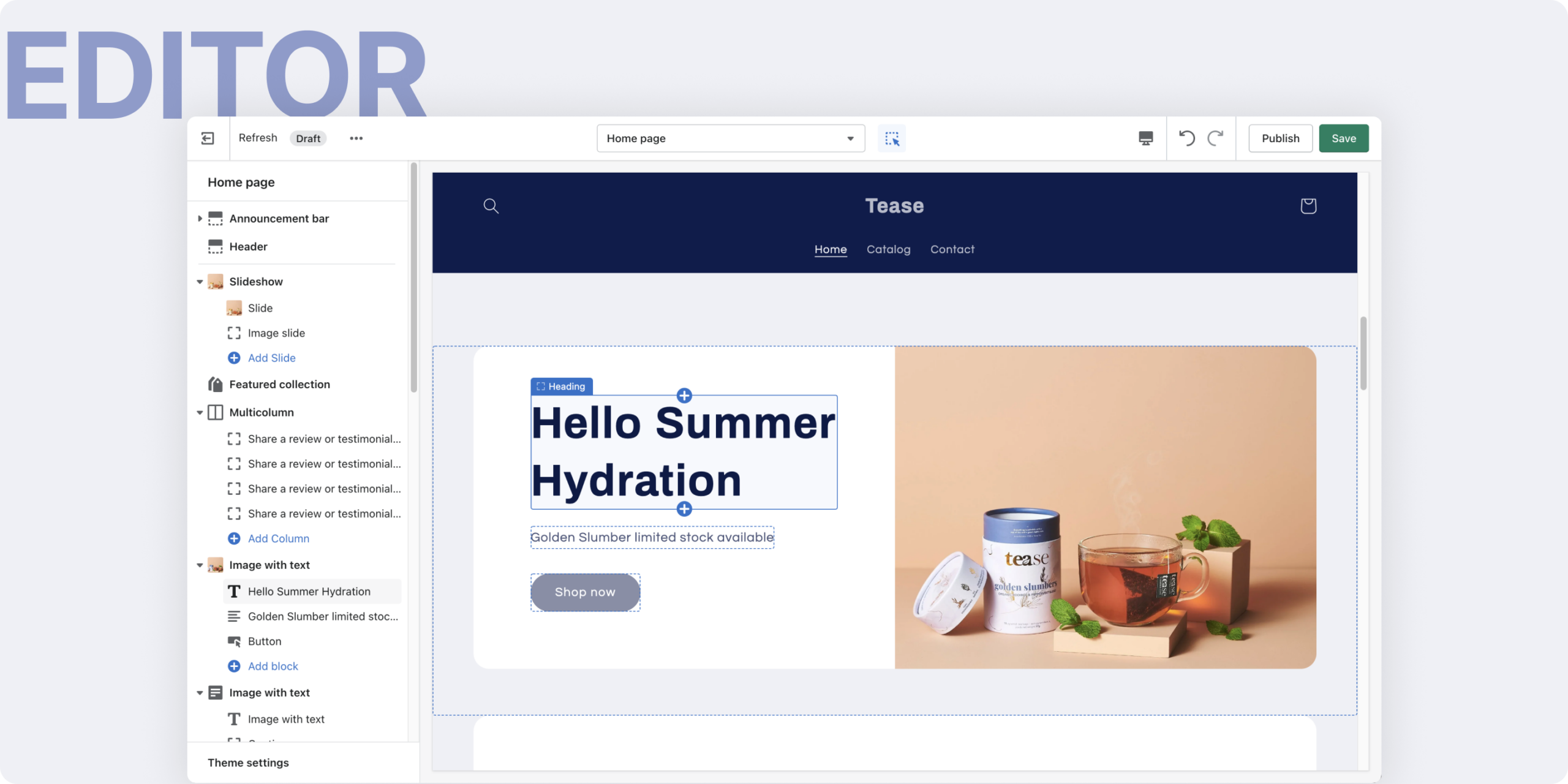
Shopify Editor2022 . Web . Interaction Design
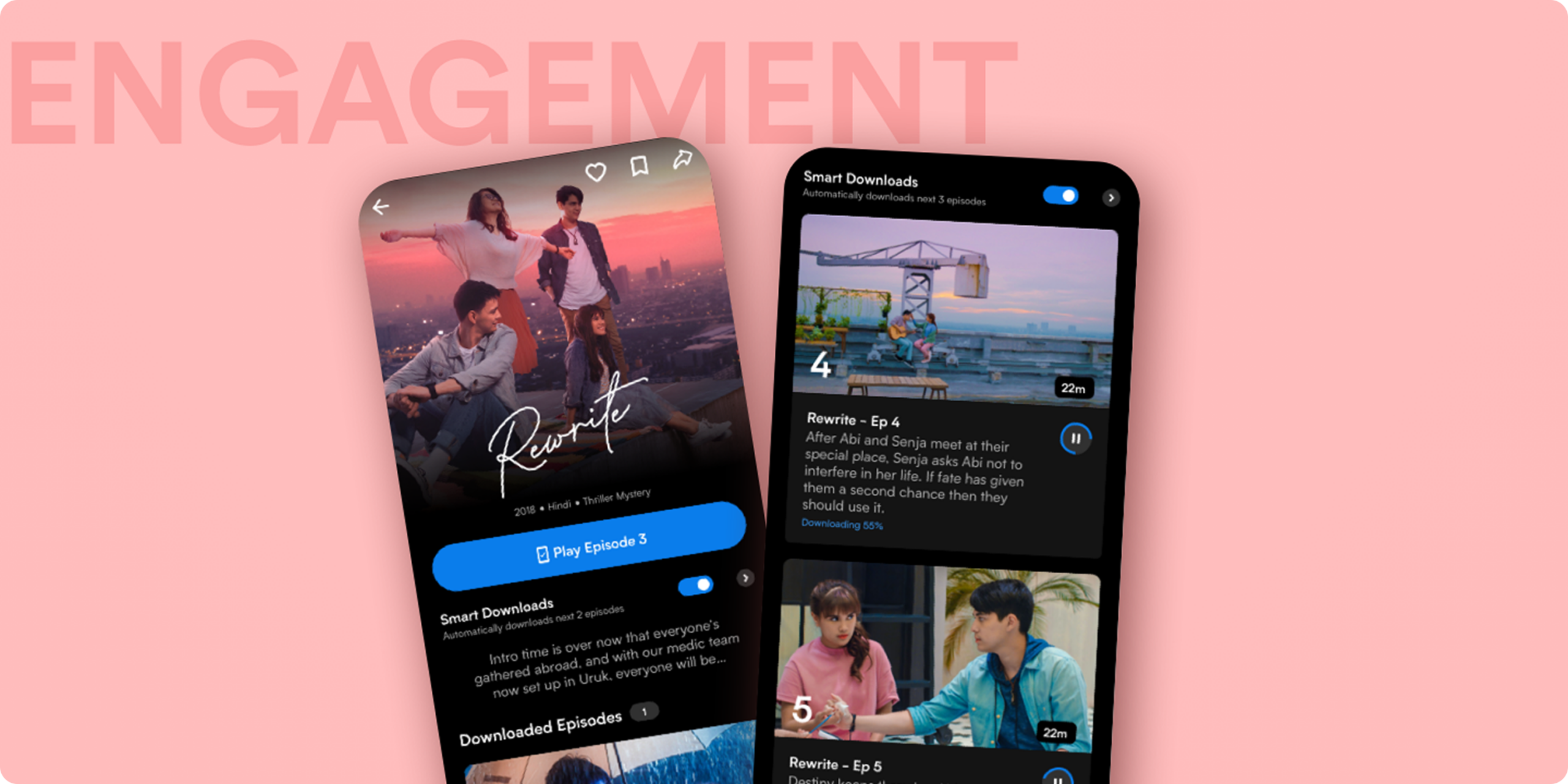
Viu Engagement2018-2019 . Mobile Design . Vision & Strategy
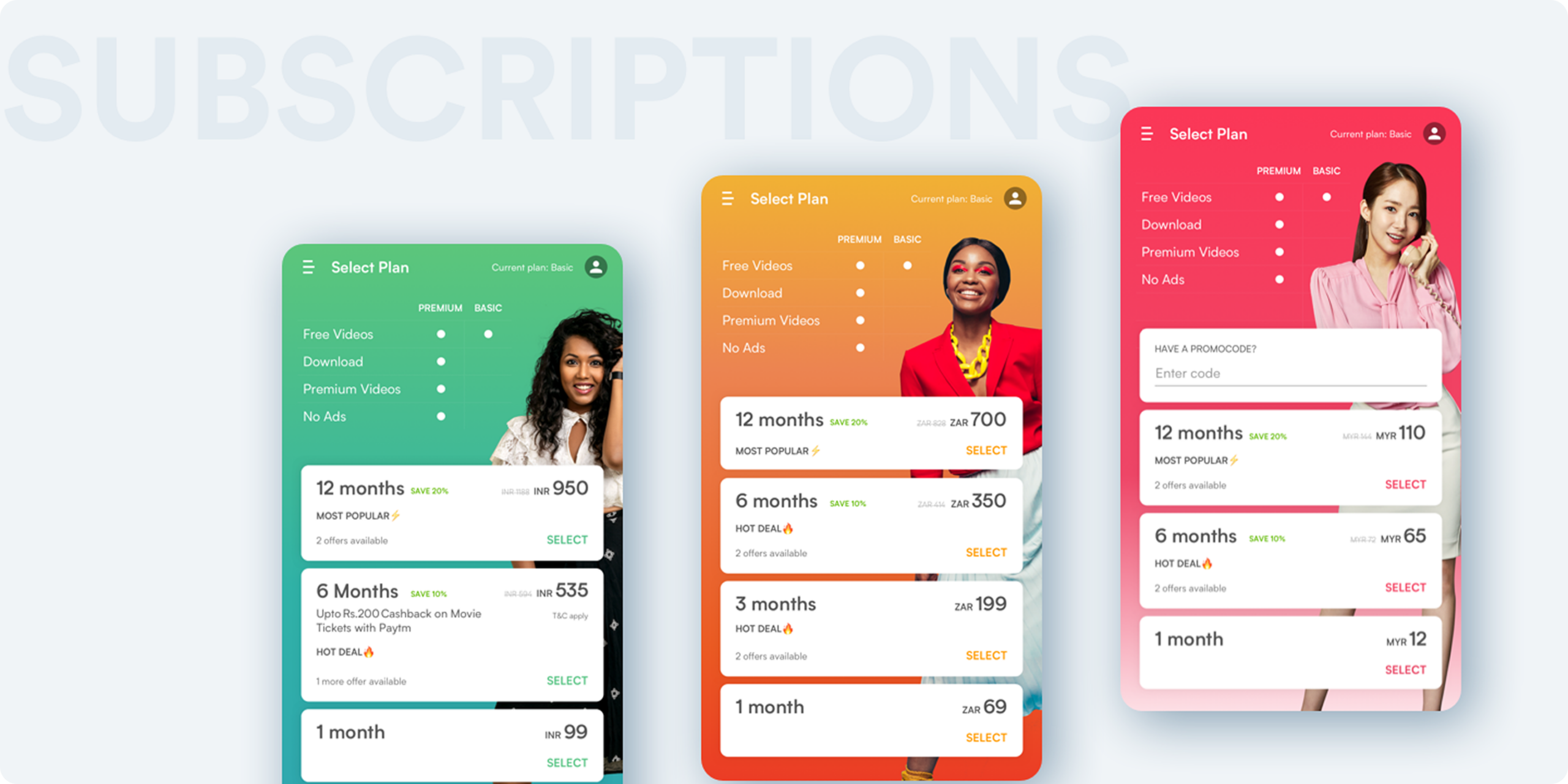
Viu Subscriptions2018 . Mobile Design . Design systems